𝗧𝗵𝗲 𝗟𝗼𝗼𝗺𝗶𝗻𝗴 𝗛𝗲𝗮𝗹𝘁𝗵 𝗖𝗿𝗶𝘀𝗶𝘀: 𝗜𝗻𝗱𝗶𝗮 𝗙𝗮𝗰𝗲𝘀 𝗮 𝗣𝗿𝗼𝗷𝗲𝗰𝘁𝗲𝗱 𝟲𝟳% 𝗦𝘂𝗿𝗴𝗲 𝗶𝗻 𝗖𝗮𝗻𝗰𝗲𝗿 𝗖𝗮𝘀𝗲𝘀 𝗯𝘆 𝟮𝟬𝟰𝟱. 𝗪𝗲 𝗠𝘂𝘀𝘁 𝗔𝗰𝘁 𝗡𝗼𝘄.
A stark warning has just been issued by the 𝗜𝗻𝗱𝗶𝗮𝗻 𝗖𝗮𝗻𝗰𝗲𝗿 𝗦𝗼𝗰𝗶𝗲𝘁𝘆 (𝗜𝗖𝗦), 𝗗𝗲𝗹𝗵𝗶, and it is one that policymakers, healthcare professionals, and every citizen needs to hear.
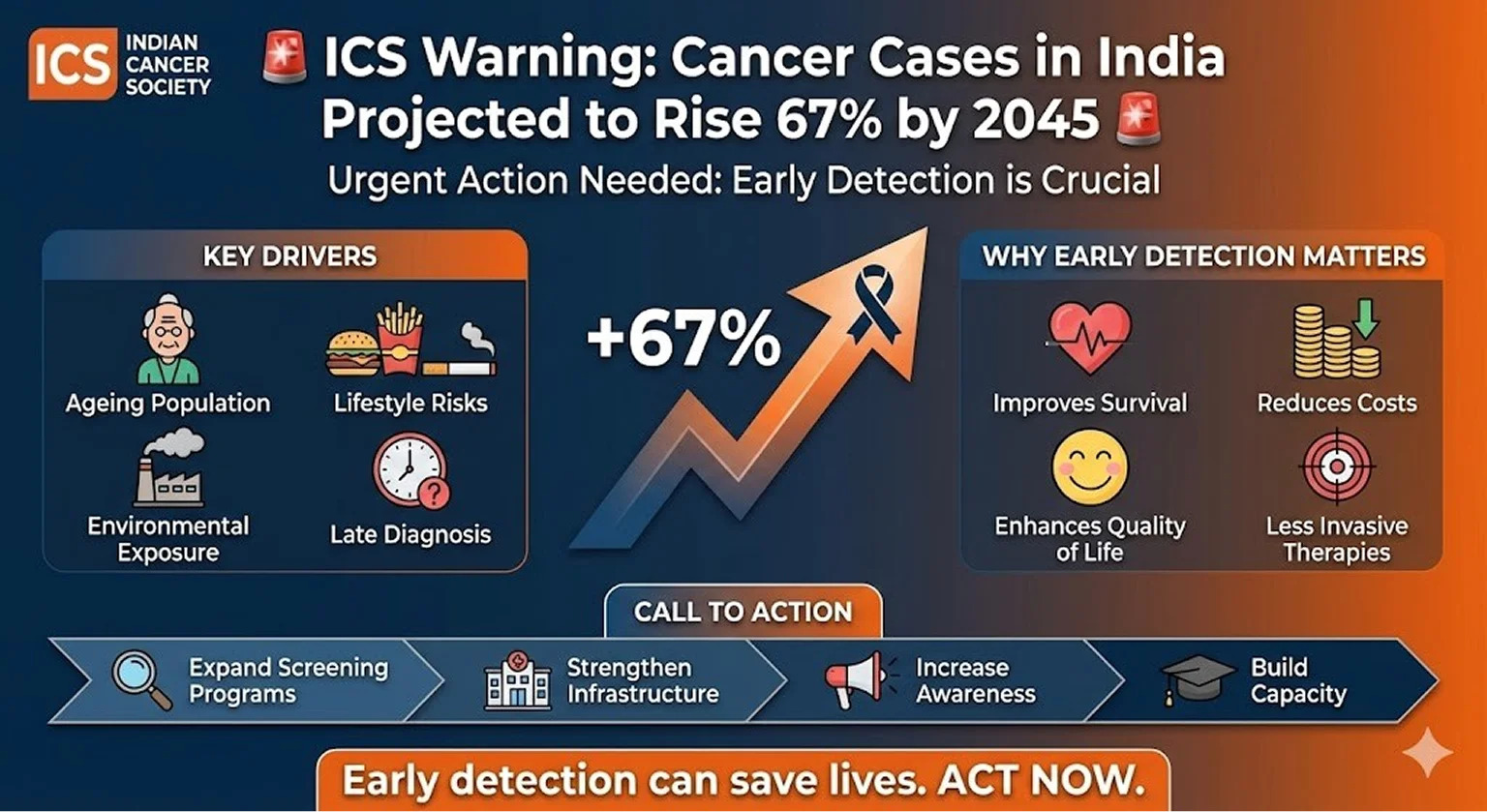
According to their latest projections, India is facing a potential 𝟲𝟳% 𝗿𝗶𝘀𝗲 in cancer cases by the year 𝟮𝟬𝟰𝟱. This isn’t just a statistic; it represents millions of lives, families, and a tremendous impending strain on our national healthcare infrastructure. The message from the ICS is clear: the clock is ticking, and our current approach to oncology care needs an urgent, proactive overhaul.
𝗧𝗵𝗲 𝗣𝗲𝗿𝗳𝗲𝗰𝘁 𝗦𝘁𝗼𝗿𝗺: 𝗪𝗵𝗮𝘁 𝗶𝘀 𝗗𝗿𝗶𝘃𝗶𝗻𝗴 𝘁𝗵𝗲 𝗥𝗶𝘀𝗲?
The projected surge is not attributable to a single cause. Instead, it is the result of several converging factors that are reshaping India’s health landscape:
- An Ageing Population: As life expectancy increases, the natural risk of developing age-related malignancies also increases.
- Lifestyle Shifts: Rapid urbanisation and changing lifestyles are introducing new risk factors. Environmental Exposure: Increasing pollution and exposure to varied environmental toxins are playing a significant role.
- 𝗧𝗵𝗲 𝗖𝗿𝗶𝘁𝗶𝗰𝗮𝗹 𝗚𝗮𝗽: Perhaps most concerning is the persistent issue of late diagnosis and limited access to screening across vast swathes of the country.
The Game Changer: Why Early Detection is Non-Negotiable
The trajectory looks grim, but it is not inevitable. The narrative changes drastically when we shift our focus from reactive late-stage treatment to proactive early detection. Catching cancer early isn’t just about statistics; it’s about human outcomes.
The ICS highlights that early detection:
- Significantly improves survival rates, turning a potential death sentence into a manageable condition.
- Reduces the complexity and crippling financial costs associated with advanced-stage treatments.
- Enhances the quality of life for patients and their caregivers.
- Enables the use of less invasive and more targeted therapies.
National Call to Action
To avert this crisis, we cannot rely on business as usual. Managing India’s future cancer burden depends entirely on the steps we take today. The Indian Cancer Society has outlined a critical roadmap that requires immediate attention from both the public and private sectors:
- Expand Screening Programs: We need aggressive, widespread screening initiatives targeting high-incidence cancers such as breast, cervical, oral, lung, and colorectal.
- 𝗗𝗲𝗰𝗲𝗻𝘁𝗿𝗮𝗹𝗶𝘇𝗲 𝗖𝗮𝗿𝗲: We must move beyond metro-centric care by strengthening diagnostic and treatment infrastructure at the district level, bringing early detection closer to where people live.
- 𝗕𝗼𝗼𝘀𝘁 𝗔𝘄𝗮𝗿𝗲𝗻𝗲𝘀𝘀: We must combat stigma and ignorance through robust public awareness campaigns and community outreach.
- 𝗕𝘂𝗶𝗹𝗱 𝗖𝗮𝗽𝗮𝗰𝗶𝘁𝘆: We need to invest heavily in training and building the capacity of healthcare professionals across the spectrum to recognise early warning signs.
The Bottom Line: Early detection saves lives
It is the most powerful weapon we have in the fight against rising cancer rates. The 67% projection is a wake-up call. Let us ensure we answer it by strengthening our prevention and screening ecosystems today to protect India’s tomorrow.