A Thought Leadership Perspective by Healthcare Leaders Collective Foundation (HLCF)
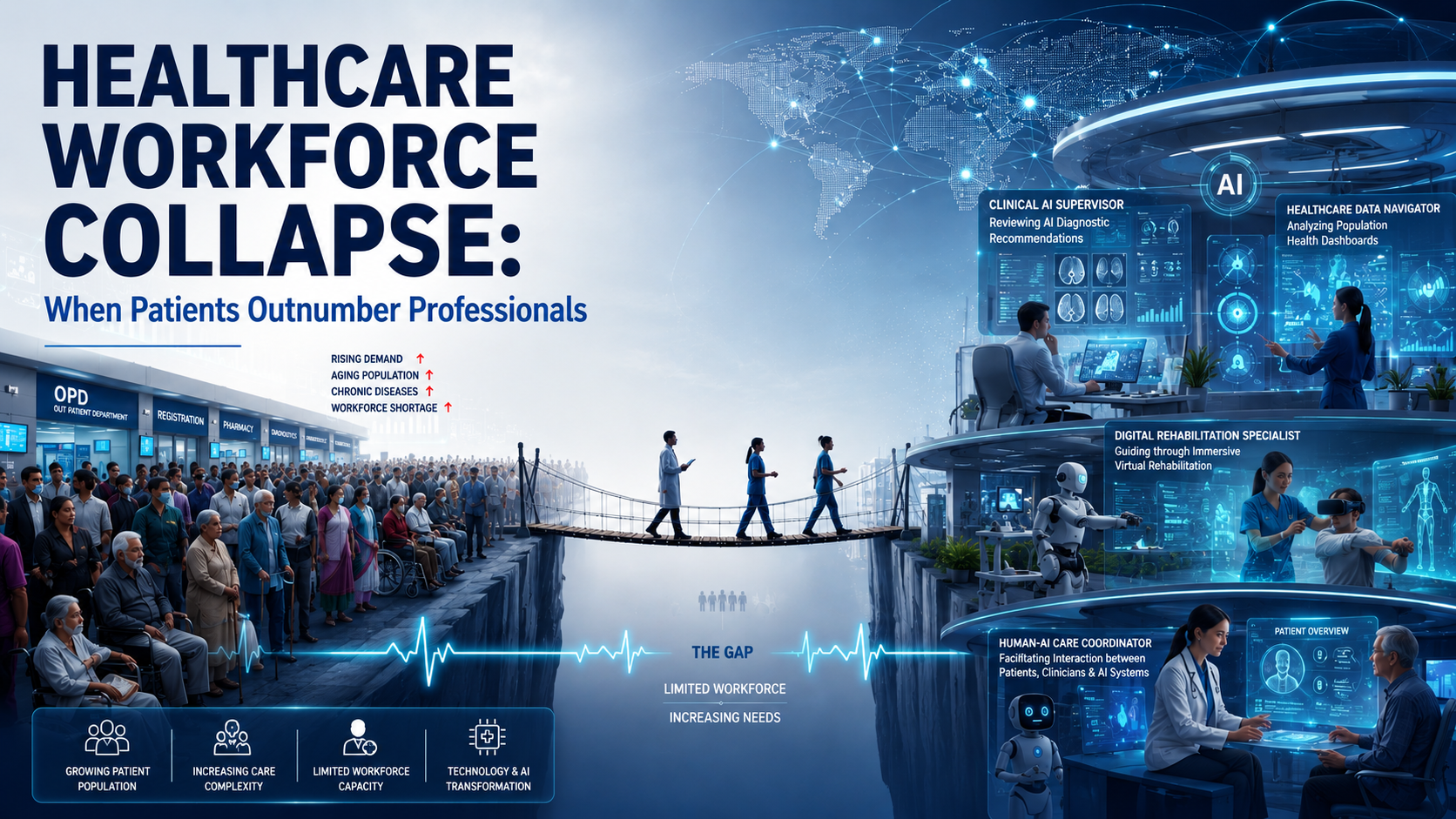
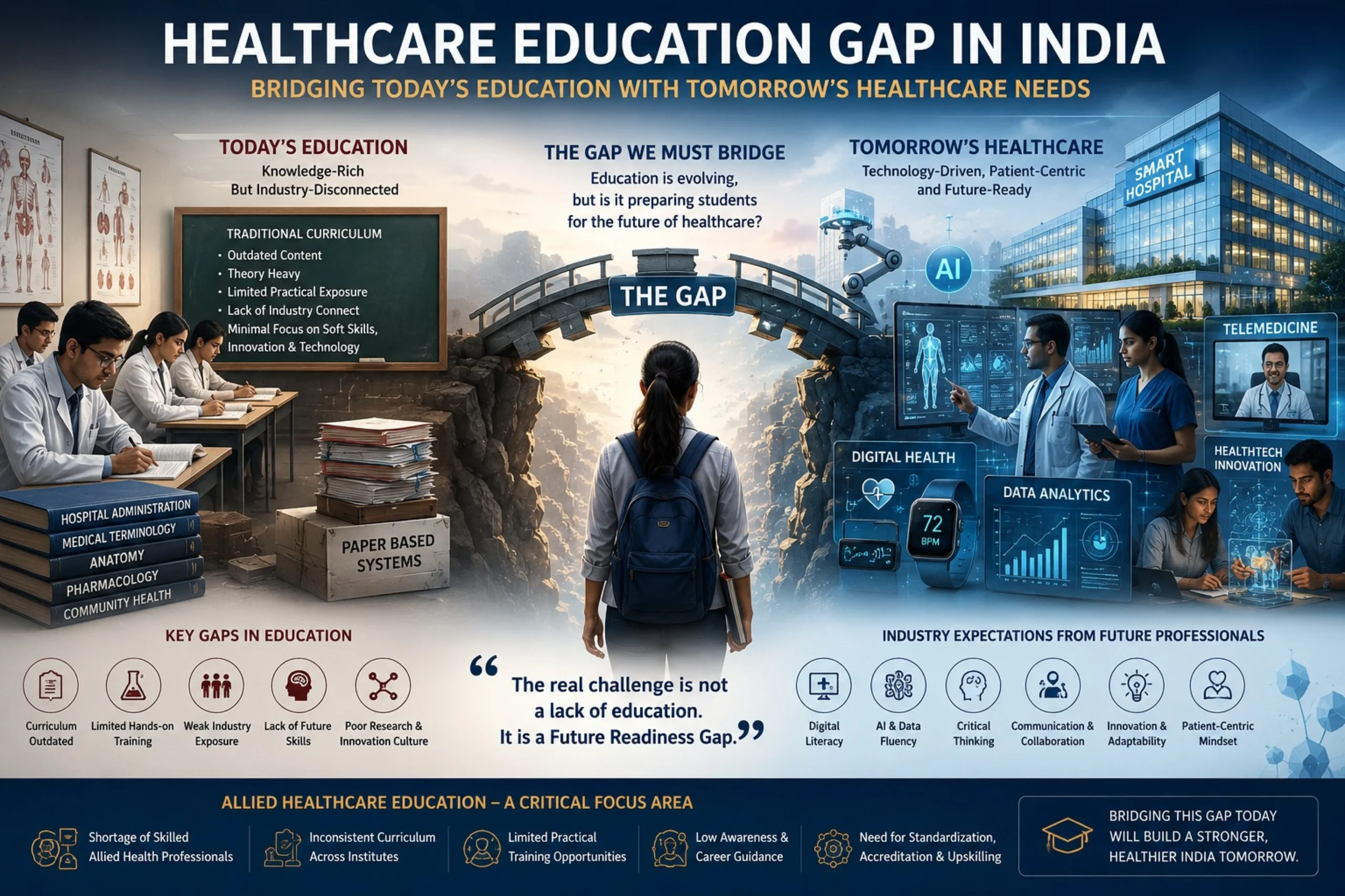
India is producing thousands of healthcare management graduates, hospital administrators, public health professionals, nursing leaders, and allied healthcare specialists every year. Universities continue to expand programs, accreditation standards evolve, and student enrollment continues to grow.
Yet healthcare organizations across the country are facing a growing paradox.
Despite an increasing pool of qualified graduates, hospital leaders frequently struggle to find professionals who are truly prepared for the realities of modern healthcare.
The issue is not a lack of education.
The issue is that healthcare education is still largely preparing students for the healthcare system of the past, while the industry is rapidly transforming into a technology-enabled, data-driven, patient-centric ecosystem.
The challenge facing healthcare education today is no longer a traditional skills gap.
It is a Future Readiness Gap.
The Industry Has Changed Faster Than the Classroom
A healthcare management student graduating in 2026 will enter an environment dramatically different from the one that existed even five years ago.
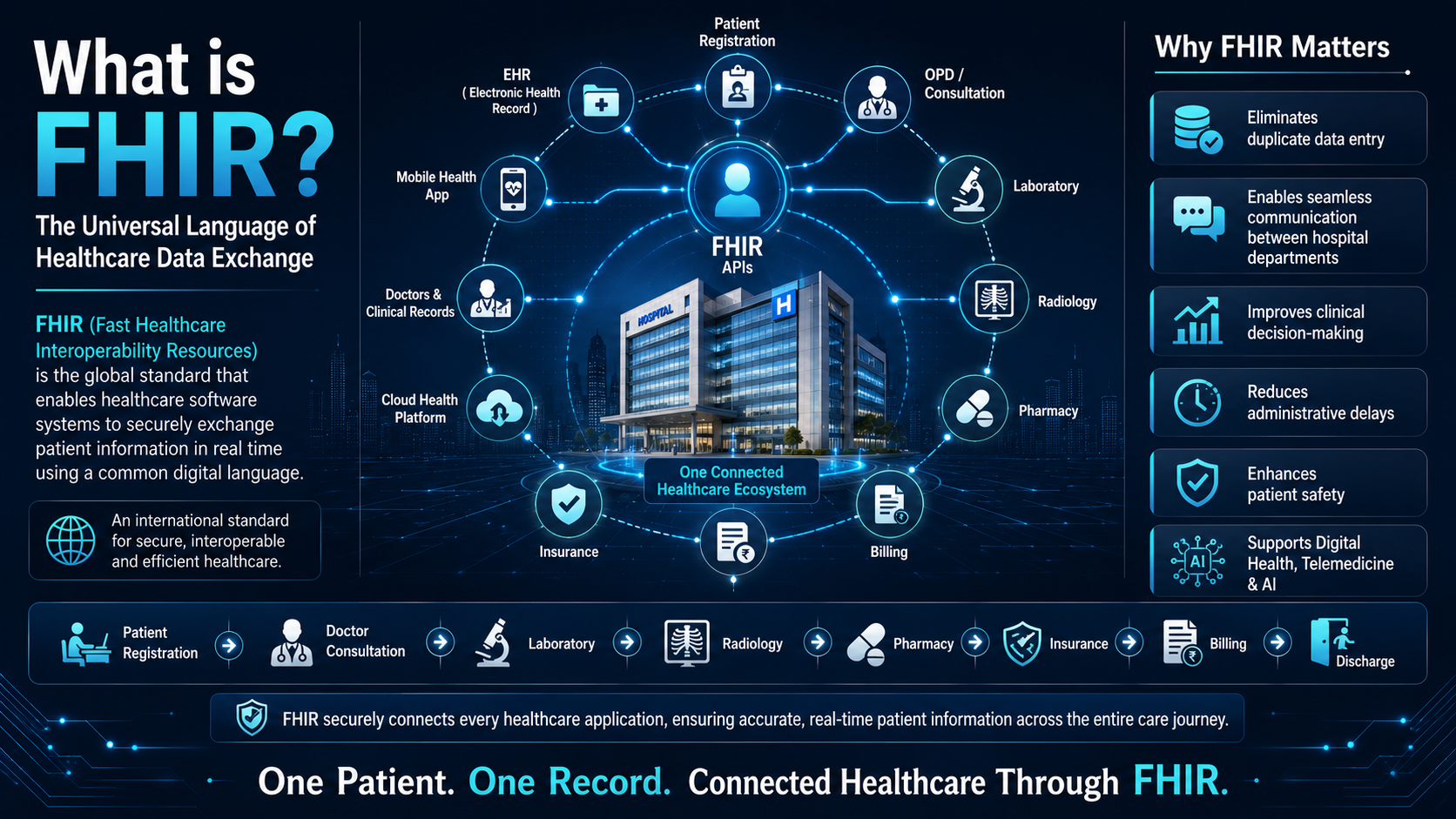
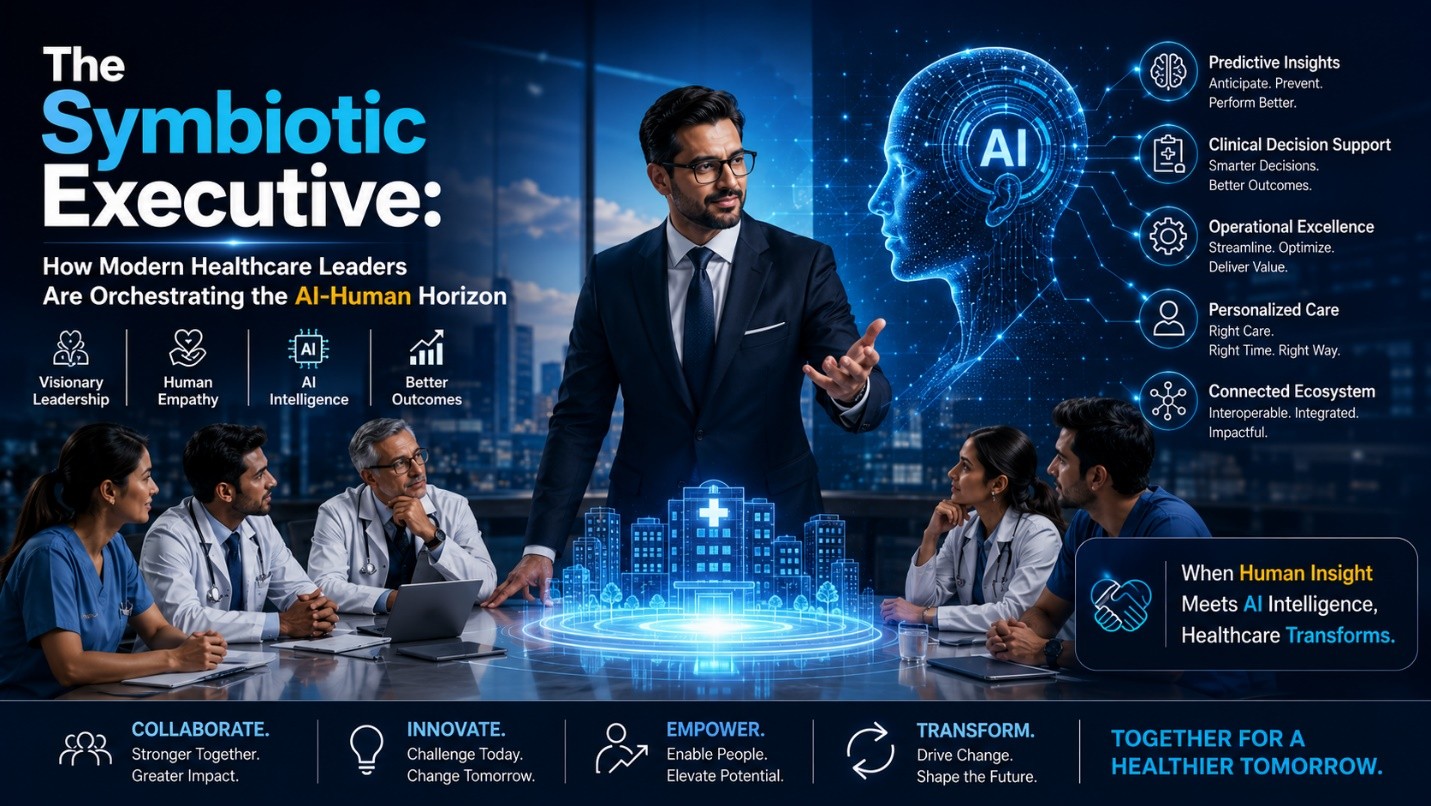
Healthcare organizations are no longer simply hospitals delivering episodic care. They are becoming integrated health ecosystems driven by artificial intelligence, digital platforms, predictive analytics, remote care models, and consumer expectations.
Modern healthcare leaders are expected to manage:
• AI-enabled clinical operations
• Digital health ecosystems
• Population health initiatives
• Value-based care models
• Healthcare innovation programs
• Multi-disciplinary partnerships
• Patient experience strategies
However, many academic programs continue to focus heavily on traditional hospital structures, legacy operational models, static case studies, and theoretical frameworks that often fail to reflect current industry realities.
As a result, graduates understand how healthcare organizations were managed, while employers are seeking professionals who understand how healthcare will be managed.
The Missing Curriculum of the Future
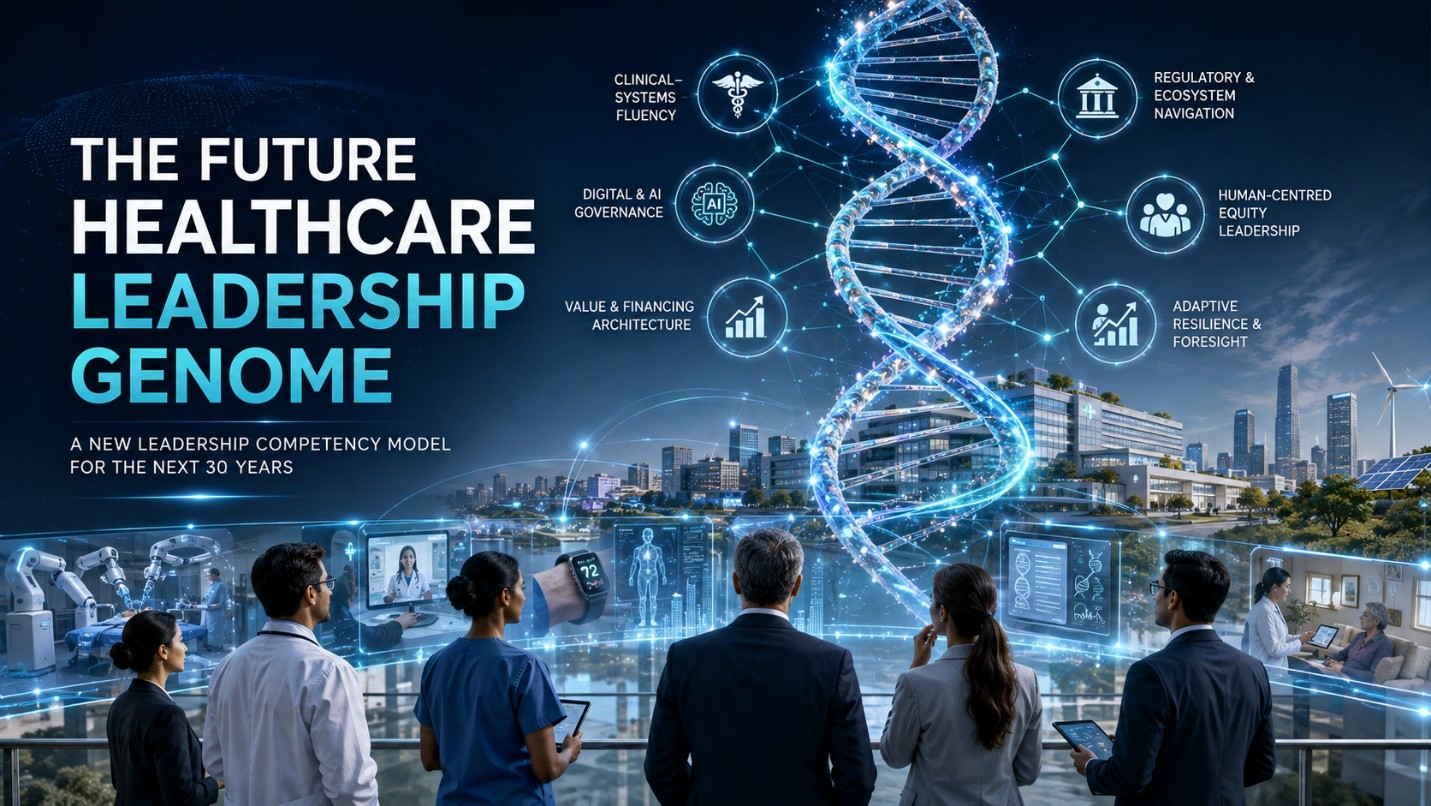
The healthcare executive of the future will require capabilities that remain largely absent from most academic programs.
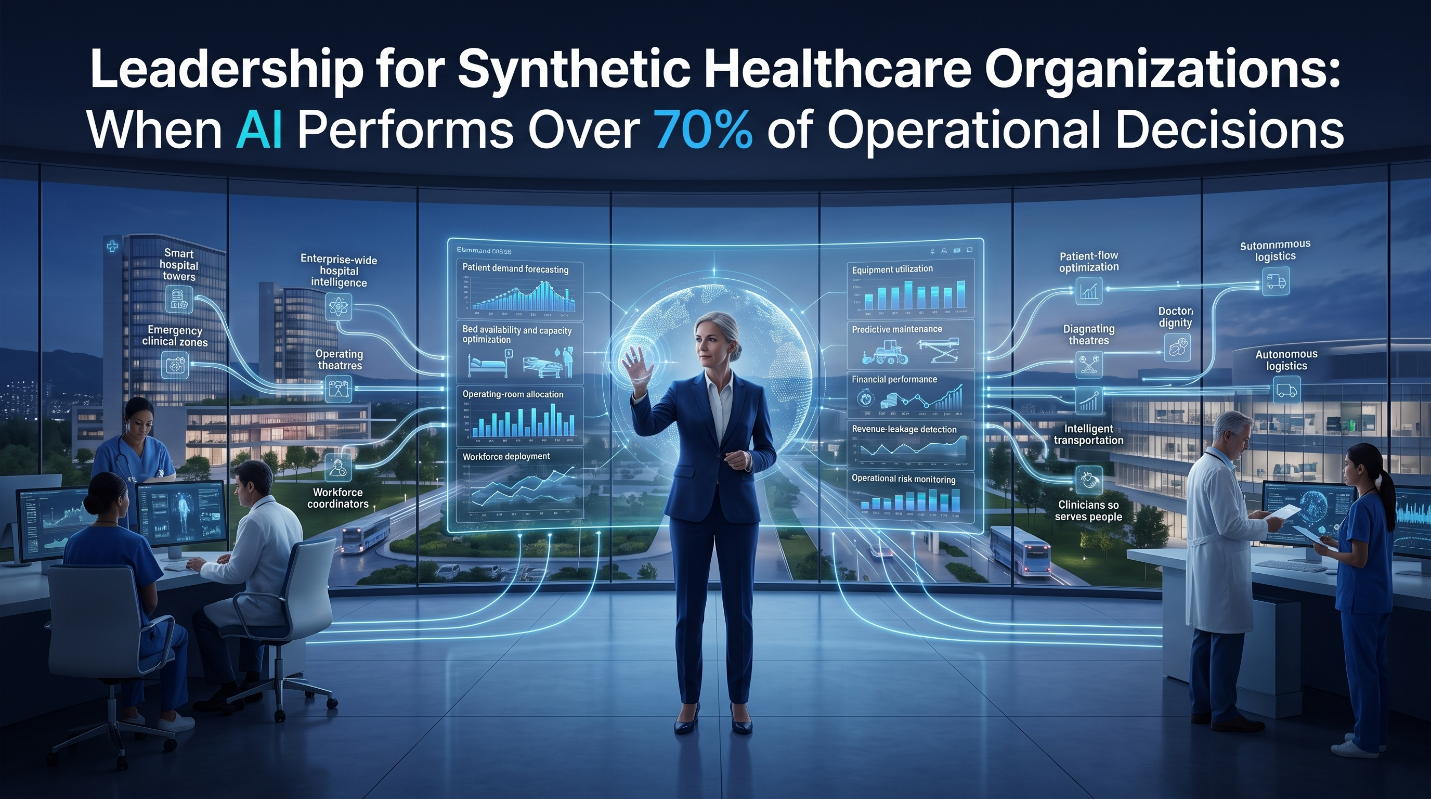
Artificial Intelligence and Human-AI Collaboration will become essential leadership competencies. Future managers will work alongside intelligent systems that support diagnosis, workforce planning, patient engagement, and operational decision-making. Managing technology will become as important as managing people.
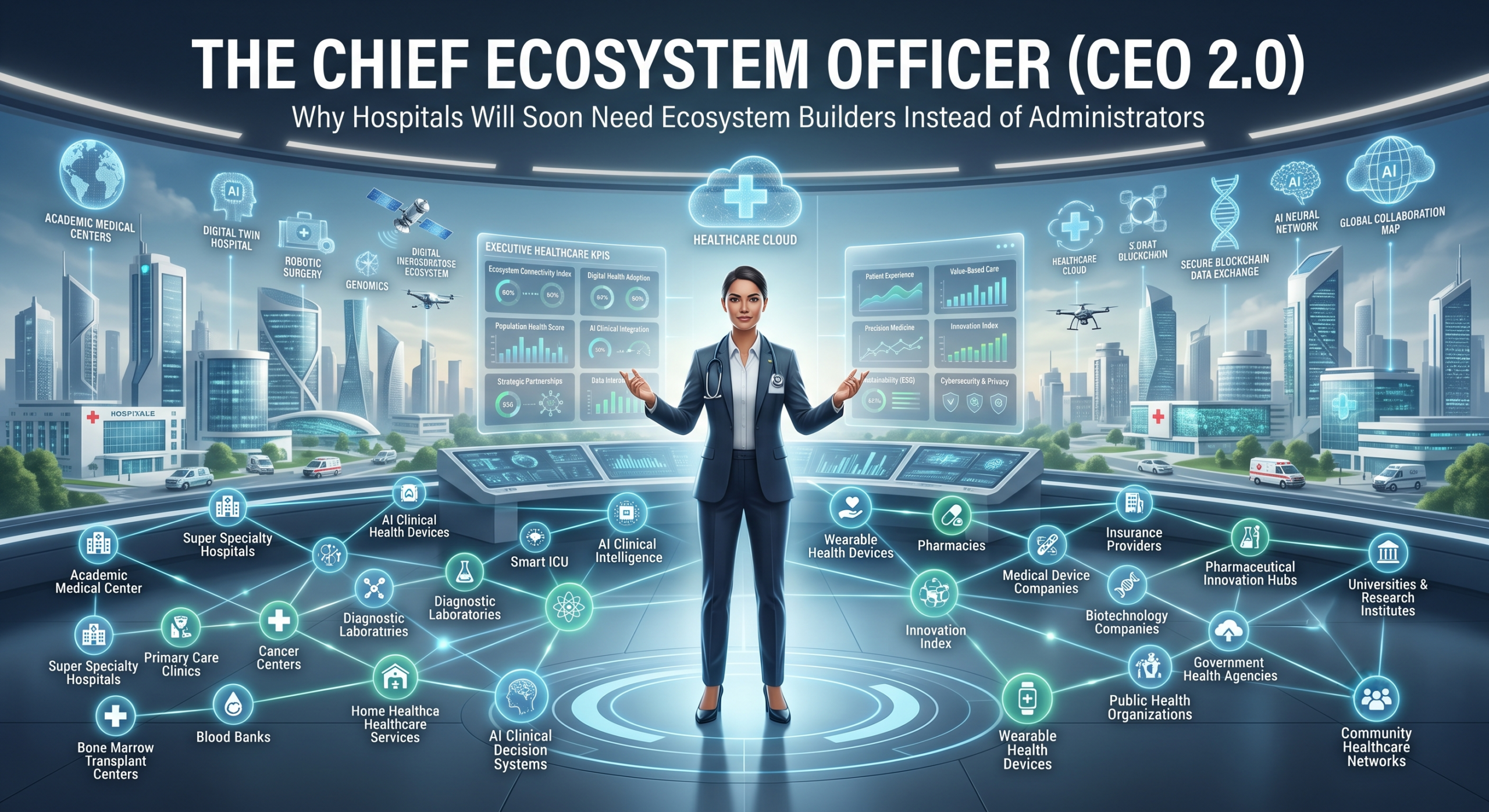
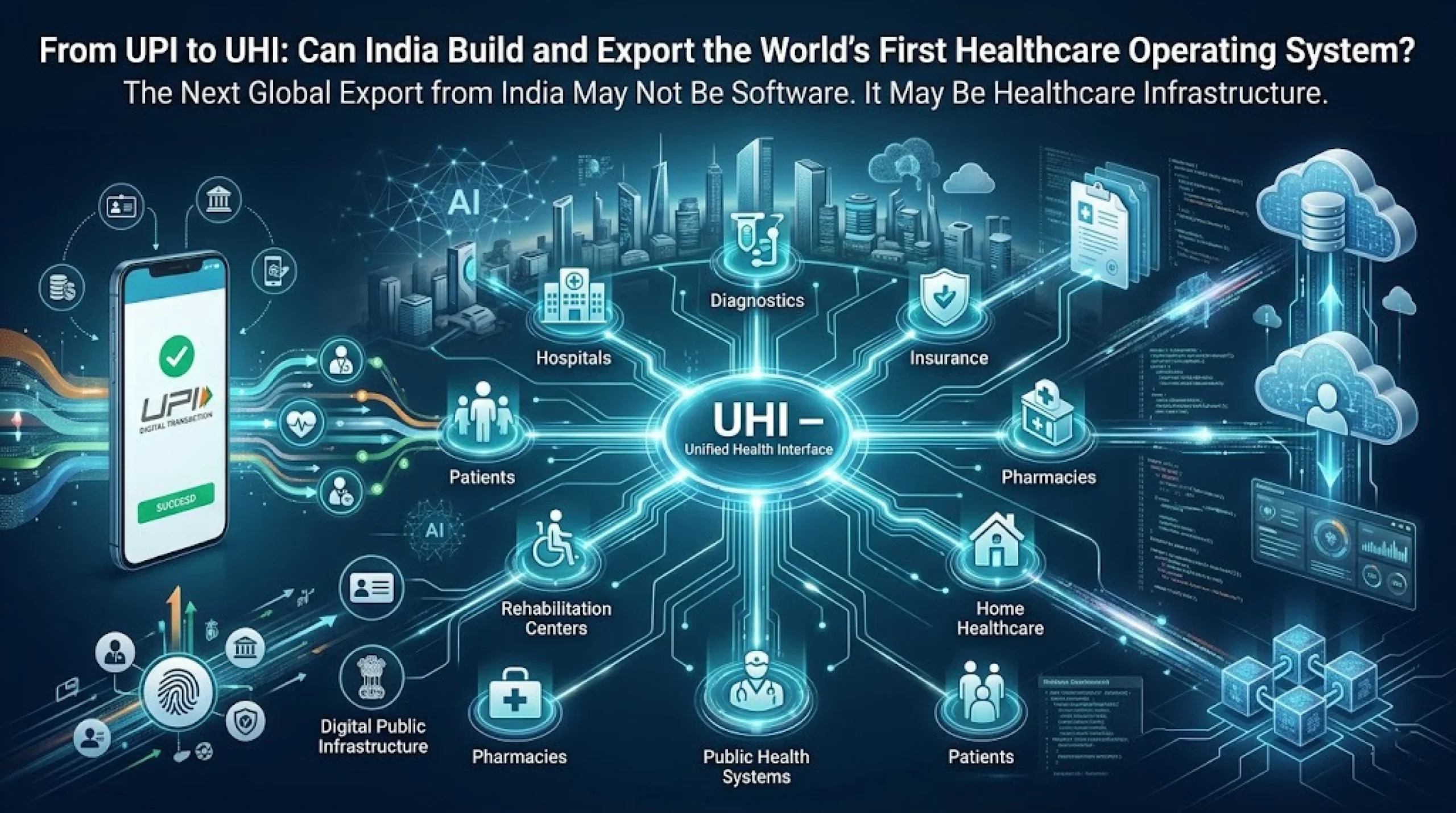
Healthcare Systems Thinking will replace institution-centric thinking. Future leaders must understand the interconnected relationships between hospitals, home healthcare, insurers, health-tech startups, public health agencies, digital platforms, and community health networks.
Innovation Leadership will become a core management function. Healthcare organizations increasingly require professionals capable of leading transformation, evaluating emerging technologies, managing innovation projects, and collaborating with startups and technology partners.
Data Interpretation will be more valuable than report generation. Leaders must learn how to convert data into decisions, insights, and strategic action. The ability to interpret complexity will become a defining leadership capability.
Finally, Human Experience Design will emerge as a competitive differentiator. Patients increasingly compare healthcare experiences not only with hospitals but also with companies such as Amazon, Apple, Uber, and Netflix. Future healthcare leaders must understand service design, behavioral science, digital engagement, and consumer expectations.
The Rise of the Hybrid Healthcare Professional
The most successful healthcare professionals of the next decade will not belong to a single discipline.
The future belongs to hybrid professionals who can combine healthcare expertise with technology, data science, behavioral psychology, entrepreneurship, design thinking, and innovation management.
Healthcare organizations are no longer looking only for specialists.
They are looking for integrators—individuals capable of connecting diverse disciplines to solve increasingly complex healthcare challenges.
The New Employability Equation
Historically, employability depended on knowledge.
Today, employability depends on capability.
Tomorrow, employability will depend on adaptability.
By 2030, healthcare employers may place greater emphasis on learning agility, systems thinking, innovation mindset, digital fluency, collaboration, resilience, ethical leadership, and problem-solving capabilities than on academic credentials alone.
Degrees may open doors.
Demonstrated capability will determine long-term success.
From Classroom to Living Laboratory
The future of healthcare education cannot remain confined to classrooms.
Hospitals must become learning environments. Students need exposure to real operational challenges, healthcare innovation labs, startup ecosystems, leadership mentoring, digital transformation projects, and multidisciplinary problem-solving experiences.
The most effective healthcare education models of the future will blur the boundaries between academia and industry.
Learning must become continuous, experiential, and deeply connected to the realities of healthcare delivery.
The HLCF Perspective
At the Healthcare Leaders Collective Foundation (HLCF), we believe the future of healthcare leadership lies at the intersection of academia, industry, innovation, technology, and human-centered care.
Our goal should not simply be to create employable graduates.
Our goal should be to develop future-ready healthcare leaders who can navigate uncertainty, embrace innovation, lead transformation, and improve health outcomes for society.
The most important question facing healthcare education today is not:
“Are students ready for jobs?”
The more important question is:
“Are students ready for the healthcare system that does not yet exist?”
The institutions that successfully answer this question will not only shape the next generation of healthcare professionals—they will shape the future of healthcare itself.
By Dr. Swapnarag Swain – Chairperson – MBA (HHM)/Associate Professor – Marketing
Indian Institute of Management Bodh Gaya