Healthcare has spent decades preparing for disease outbreaks, medical innovations, and demographic shifts. Yet one of the most disruptive challenges of the next decade is neither a virus nor a technology—it is the widening gap between the number of patients needing care and the number of professionals available to provide it.
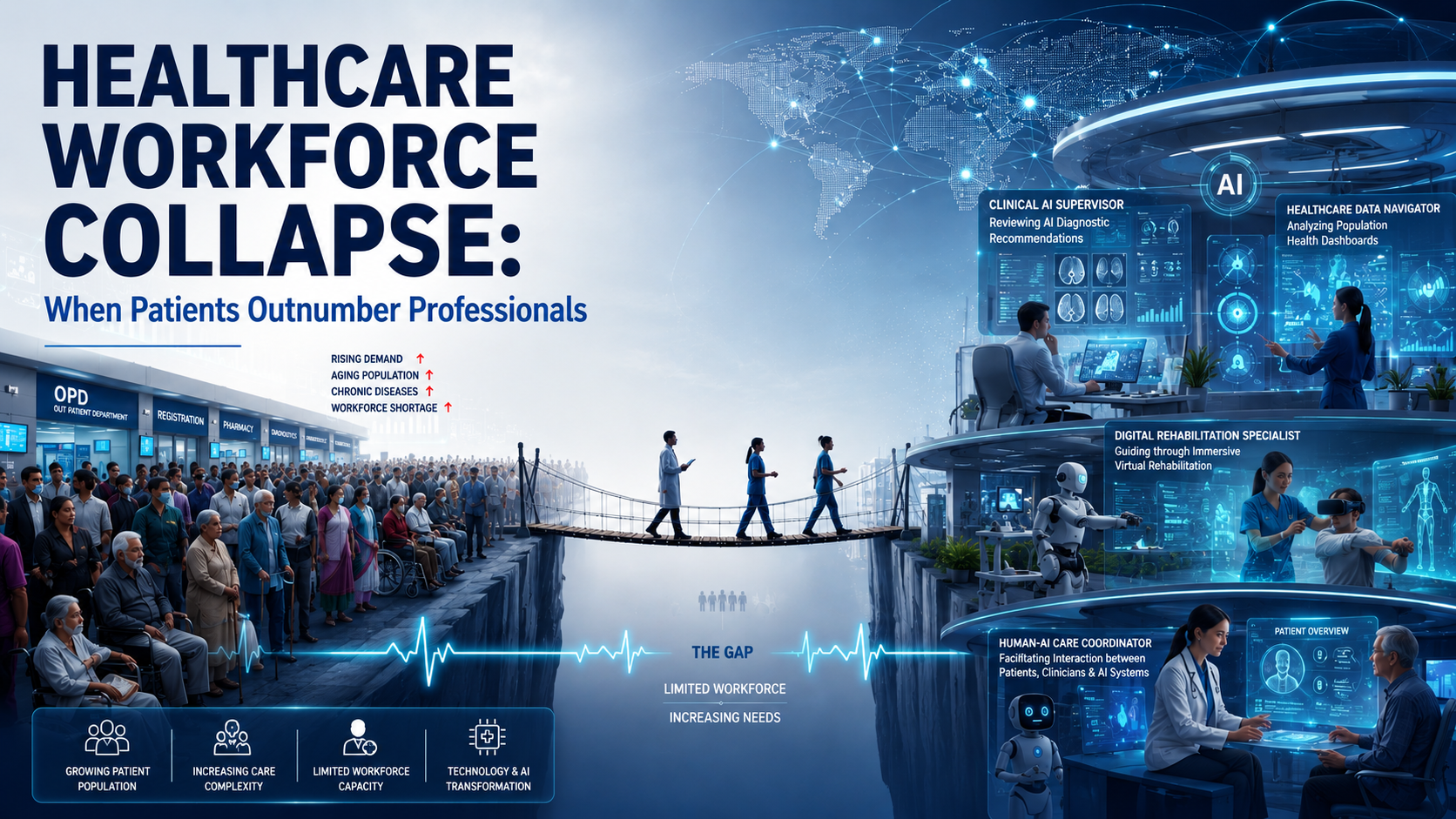
Around the world, healthcare systems are facing a silent workforce crisis. Populations are ageing, chronic diseases are increasing, and patient expectations continue to rise. At the same time, physician burnout, nursing shortages, migration of skilled professionals, and limited training capacity are shrinking the available workforce.
The uncomfortable reality is simple: healthcare demand is growing faster than healthcare talent.
The Great Imbalance
For generations, healthcare was built around a human-intensive model. Every consultation, diagnosis, treatment plan, and follow-up relied heavily on trained professionals. However, the mathematics of modern healthcare is changing.
A single specialist today may manage hundreds more patients than a decade ago. Hospitals struggle to fill critical positions. Rural and underserved communities often face severe shortages of clinicians. Meanwhile, the complexity of care continues to increase.
The question is no longer whether technology will become part of healthcare delivery. The question is whether healthcare can survive without it.
Will AI Replace Healthcare Jobs?
The answer is both yes and no.
Artificial Intelligence is unlikely to replace healthcare professionals entirely. Healthcare remains deeply human, requiring empathy, judgment, trust, and ethical decision-making. Patients seek reassurance, not just information.
However, AI will replace many healthcare tasks.
Activities such as preliminary image analysis, documentation, appointment triaging, coding, billing verification, workflow coordination, and routine monitoring are increasingly becoming automated. In many organisations, AI already performs work that previously required multiple administrative personnel.
The future healthcare professional will not compete against AI. Instead, they will compete against professionals who know how to work effectively with AI.
Which Healthcare Roles May Decline?
Several traditional functions may experience significant transformation over the next decade:
• Medical transcription and documentation specialists
• Routine medical coding and claims processing roles
• Basic appointment scheduling teams
• First-level diagnostic screening positions
• Administrative coordination functions dependent on manual processes
These roles may not disappear overnight, but their workforce requirements will decline as automation becomes more accurate and widely adopted.
Healthcare organisations that continue to build labour-intensive operational models may face sustainability challenges.
The Rise of New Healthcare Professions
History shows that every technological revolution creates more specialised jobs than it eliminates.
Healthcare’s AI era will be no different.
Clinical AI Supervisors
As AI systems begin supporting diagnosis and treatment recommendations, organisations will require professionals who validate outputs, monitor safety, investigate anomalies, and ensure clinical accountability.
The role of the Clinical AI Supervisor will become as important as that of today’s quality and patient safety leaders.
Healthcare Data Navigators
Healthcare generates enormous volumes of information, yet much of it remains underutilized.
Healthcare Data Navigators will bridge the gap between complex datasets and actionable clinical decisions. Their responsibility will be translating information into insights that physicians, administrators, and patients can understand and use.
Digital Rehabilitation Specialists
Future rehabilitation will extend far beyond physical hospital visits.
Virtual reality therapies, remote monitoring platforms, digital therapeutics, and AI-powered recovery programs will require specialists capable of combining clinical expertise with technology-enabled patient engagement.
Human-AI Care Coordinators
Perhaps the most important emerging role will be the Human-AI Care Coordinator.
These professionals will manage the interaction between patients, clinicians, digital systems, and AI tools. Their responsibility will be ensuring that technology enhances care rather than complicates it.
In many ways, they will become the translators between humanity and automation.
The Leadership Challenge
The greatest risk facing healthcare organisations is not technological disruption.
It is workforce disruption.
Many leaders continue to view workforce planning as a recruitment issue. In reality, it has become a strategic transformation issue.
The healthcare organisations that thrive in the coming decade will not necessarily be those with the most advanced technology. They will be those that successfully redesign roles, retrain employees, and create new career pathways for a technology-enabled workforce.
Leaders must stop asking:
“𝙃𝙤𝙬 𝙢𝙖𝙣𝙮 𝙥𝙚𝙤𝙥𝙡𝙚 𝙬𝙞𝙡𝙡 𝘼𝙄 𝙧𝙚𝙥𝙡𝙖𝙘𝙚?”
Instead, they should ask:
“𝙒𝙝𝙖𝙩 𝙘𝙖𝙥𝙖𝙗𝙞𝙡𝙞𝙩𝙞𝙚𝙨 𝙬𝙞𝙡𝙡 𝙤𝙪𝙧 𝙬𝙤𝙧𝙠𝙛𝙤𝙧𝙘𝙚 𝙣𝙚𝙚𝙙 𝙞𝙣 𝙖𝙣 𝘼𝙄-𝙙𝙧𝙞𝙫𝙚𝙣 𝙝𝙚𝙖𝙡𝙩𝙝𝙘𝙖𝙧𝙚 𝙚𝙘𝙤𝙨𝙮𝙨𝙩𝙚𝙢?”
The difference between these questions will determine whether organisations lead transformation or become victims of it.
A New Social Contract for Healthcare
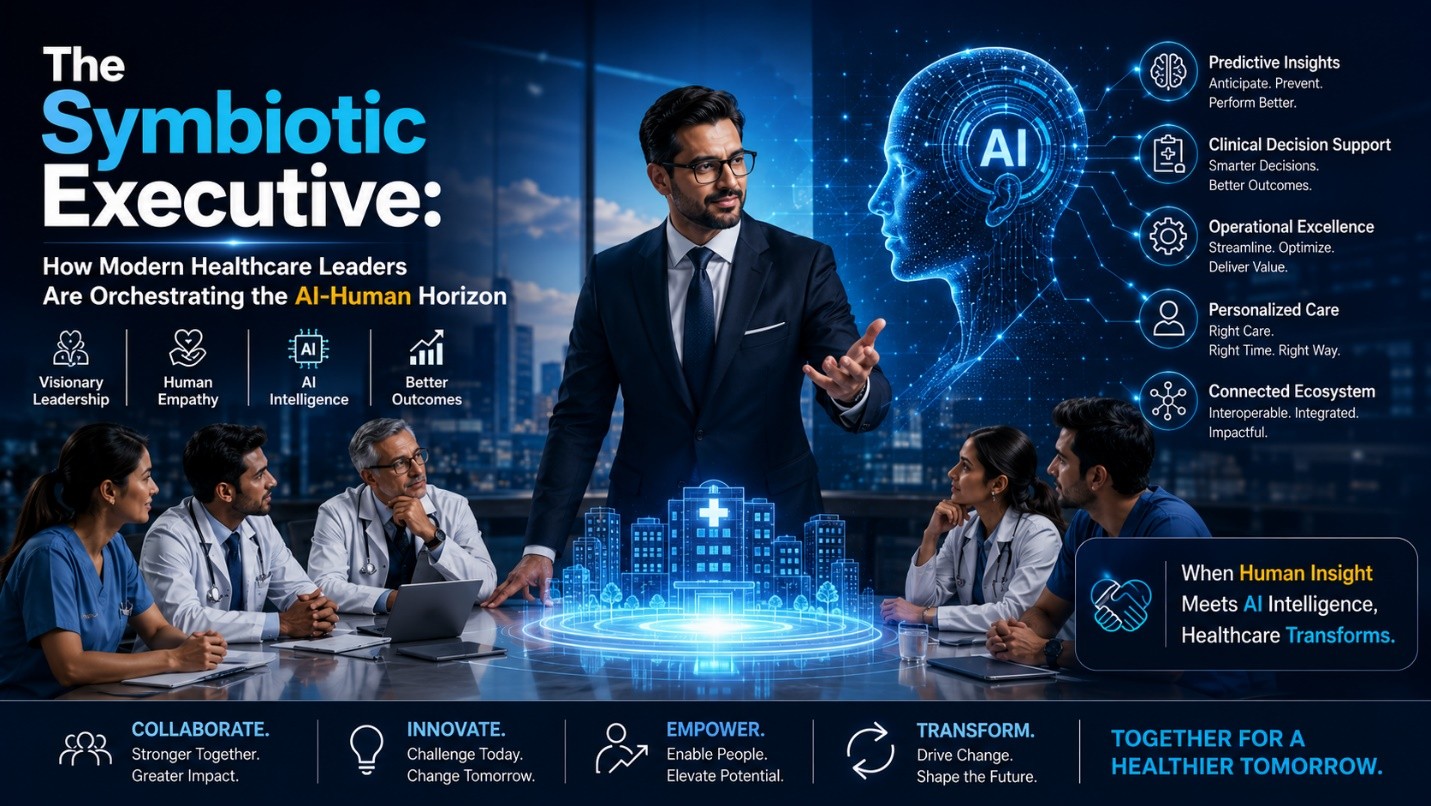
Healthcare’s future is unlikely to be fully human or fully automated.
It will be a partnership.
Machines will process information at unprecedented speed. Humans will provide compassion, ethical judgment, creativity, and trust. The organisations that integrate both effectively will deliver better outcomes at greater scale.
The workforce crisis is not simply a staffing problem. It is an opportunity to redefine healthcare careers, elevate professional capabilities, and build a system that is both technologically advanced and profoundly human.
The future healthcare worker may not look like today’s healthcare worker.
But the future patient will still need someone who understands not only their condition—but also their fears, hopes, and humanity.
And that is a role no algorithm can fully replace.
By Dr. Vandana Sharma – Director Operations Indus Group of Hospitals