
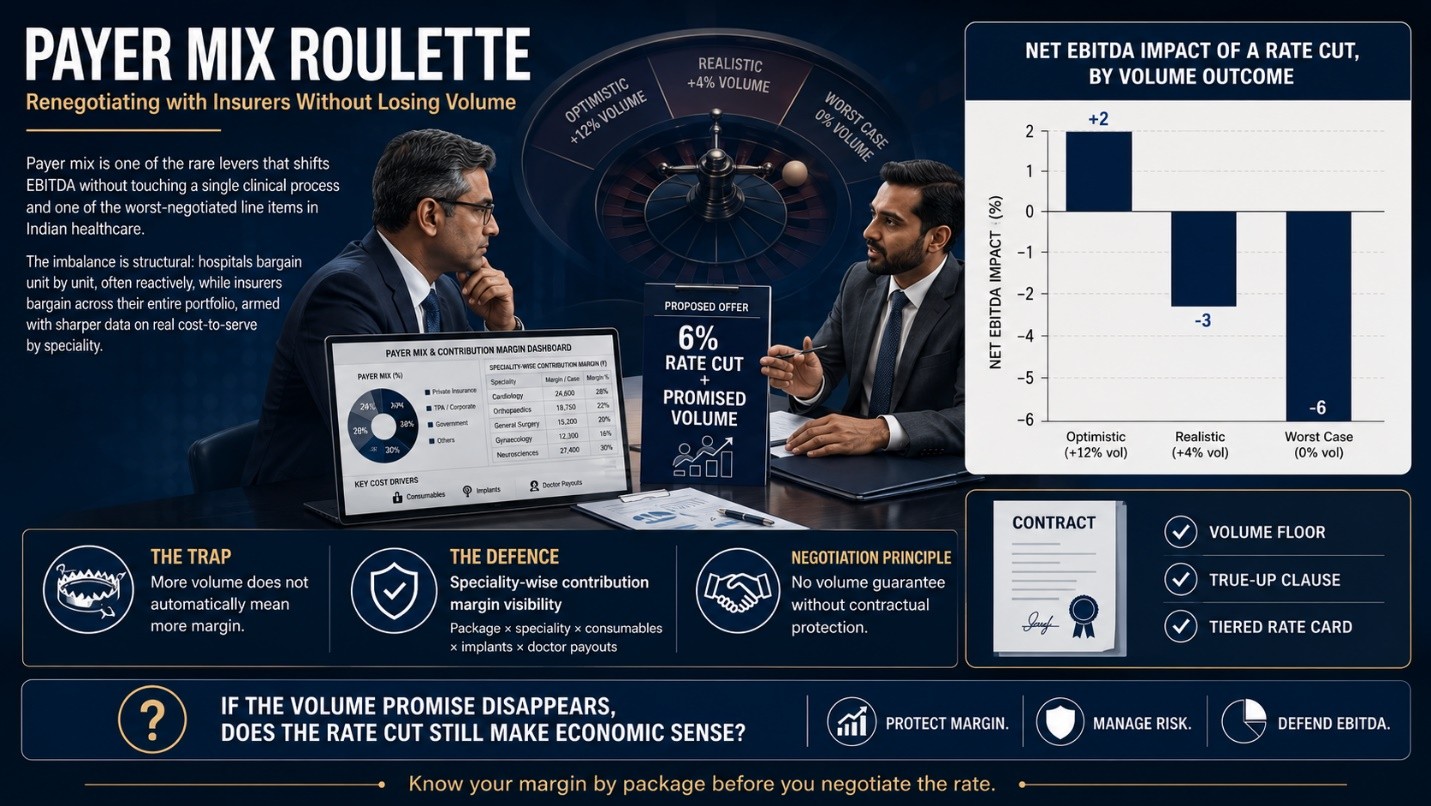
Sit across the table from an insurer’s network manager for long enough, and you’ll hear the same pitch: rates can’t move, but volume can. It sounds like a reasonable exchange. Most of the time, it isn’t.
Payer mix is one of the rare levers that shifts 𝗘𝗕𝗜𝗧𝗗𝗔 without touching a single clinical process and one of the worst-negotiated line items in Indian healthcare. The imbalance is structural: hospitals bargain unit by unit, often reactively, while insurers bargain across their entire portfolio, armed with far sharper data on a hospital’s real cost-to-serve by speciality.
𝗔𝘁 𝗮 𝗴𝗹𝗮𝗻𝗰𝗲: a volume guarantee attached to a rate cut is the corporate version of “the cheque is in the post”, plausible in theory, rare in practice.
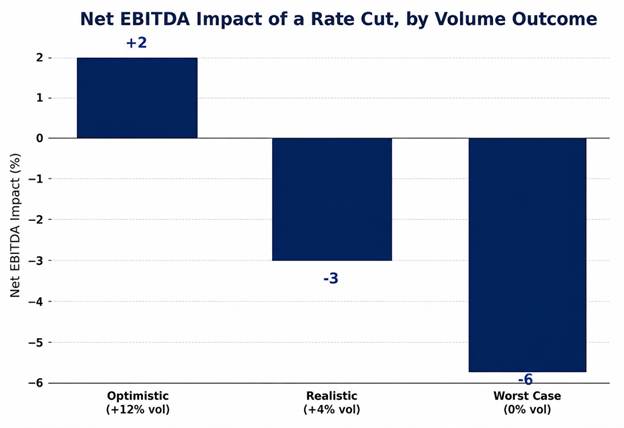
Here’s how the trap plays out. An insurer offers 𝟭𝟮% more volume for a 𝟲% cut on high-frequency packages, 𝗘𝗕𝗜𝗧𝗗𝗔-𝗻𝗲𝘂𝘁𝗿𝗮𝗹 on paper. In reality, the extra volume rarely spreads evenly; it clusters in exactly the specialities the insurer’s actuaries have already flagged as overpriced. The hospital ends up doing more work for less margin, and it can take two to three quarters for the P&L to show it.
The chart below shows why: even a modest shortfall in the promised volume turns a rate cut from 𝗘𝗕𝗜𝗧𝗗𝗔-𝗮𝗰𝗰𝗿𝗲𝘁𝗶𝘃𝗲 to EBITDA-negative.
See content credentials
The defence starts before the meeting. Build a speciality-wise contribution margin model per package, not overall hospital 𝗘𝗕𝗜𝗧𝗗𝗔 adjusted for consumables, implants, and doctor payouts. Without it, you’re negotiating blind against a counterparty that isn’t.
Then segment what you’re genuinely willing to trade. Diagnostics-heavy, day-care packages often do respond to price with real incremental volume. Complex surgical packages with fixed implant costs rarely do; margin transfers directly to the insurer, volume guarantee or not. And treat any such guarantee as worthless unless it’s contractually binding, with a floor and a true-up clause; otherwise, it’s a promise with no penalty for breaking it.
One tactic that has worked well: a tiered rate card tied to realised volume bands, so the insurer only gets the rate they want if they deliver the volume they promised, shifting the downside back where it belongs. Run the counterfactual before every renewal: what does the speciality’s margin look like if the cut lands but the volume never shows up? If it still holds up, take the trade. If it turns negative, the volume promise is doing all the work reason for caution, not comfort.
Finally, fold payer performance into the regular MIS cycle: realised mix, realised margin, denial rates every quarter, not just at renewal. A payer that looks good on the rate card can quietly become your worst relationship once denials and TAT are counted in.
These negotiations are won or lost before anyone sits down, depending on whether you know your own margin by package better than the insurer does. Most hospitals don’t. That gap is exactly where 𝗘𝗕𝗜𝗧𝗗𝗔 quietly bleeds out, one renewal at a time.
How granular is your organisation’s payer-margin visibility hospital-wide, or down to speciality and package? That granularity is usually the line between a negotiation and a surrender.
— 𝗠𝗿. 𝗣𝗿𝗮𝗵𝗹𝗮𝗱 𝗜𝗻𝗮𝗻𝗶 – 𝗚𝗹𝗼𝗯𝗮𝗹 𝗛𝗲𝗮𝗹𝘁𝗵𝗰𝗮𝗿𝗲 𝗙𝗶𝗻𝗮𝗻𝗰𝗲 𝗟𝗲𝗮𝗱𝗲𝗿 | 𝗛𝗲𝗮𝗹𝘁𝗵𝗰𝗮𝗿𝗲 𝗘𝗰𝗼𝗻𝗼𝗺𝗶𝘀𝘁