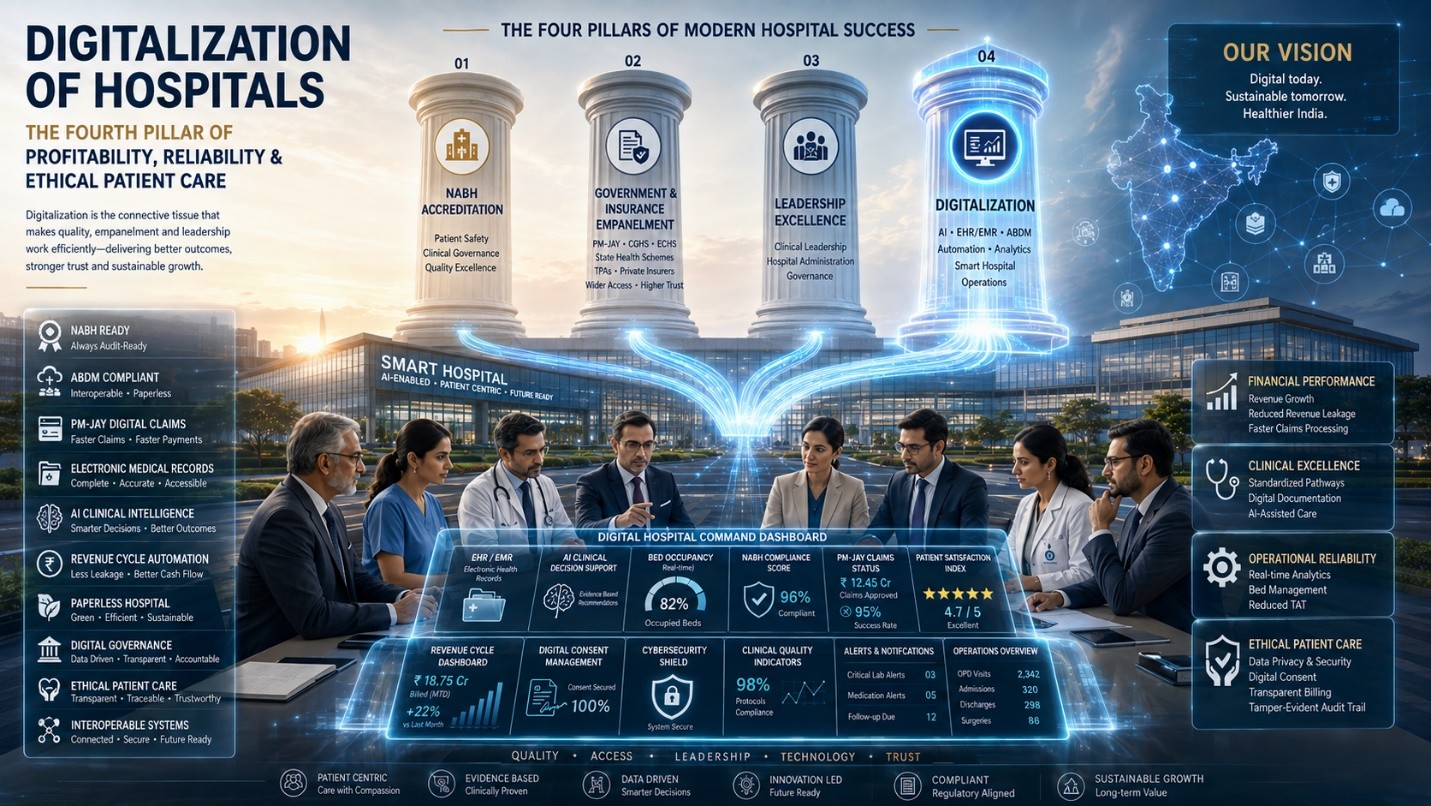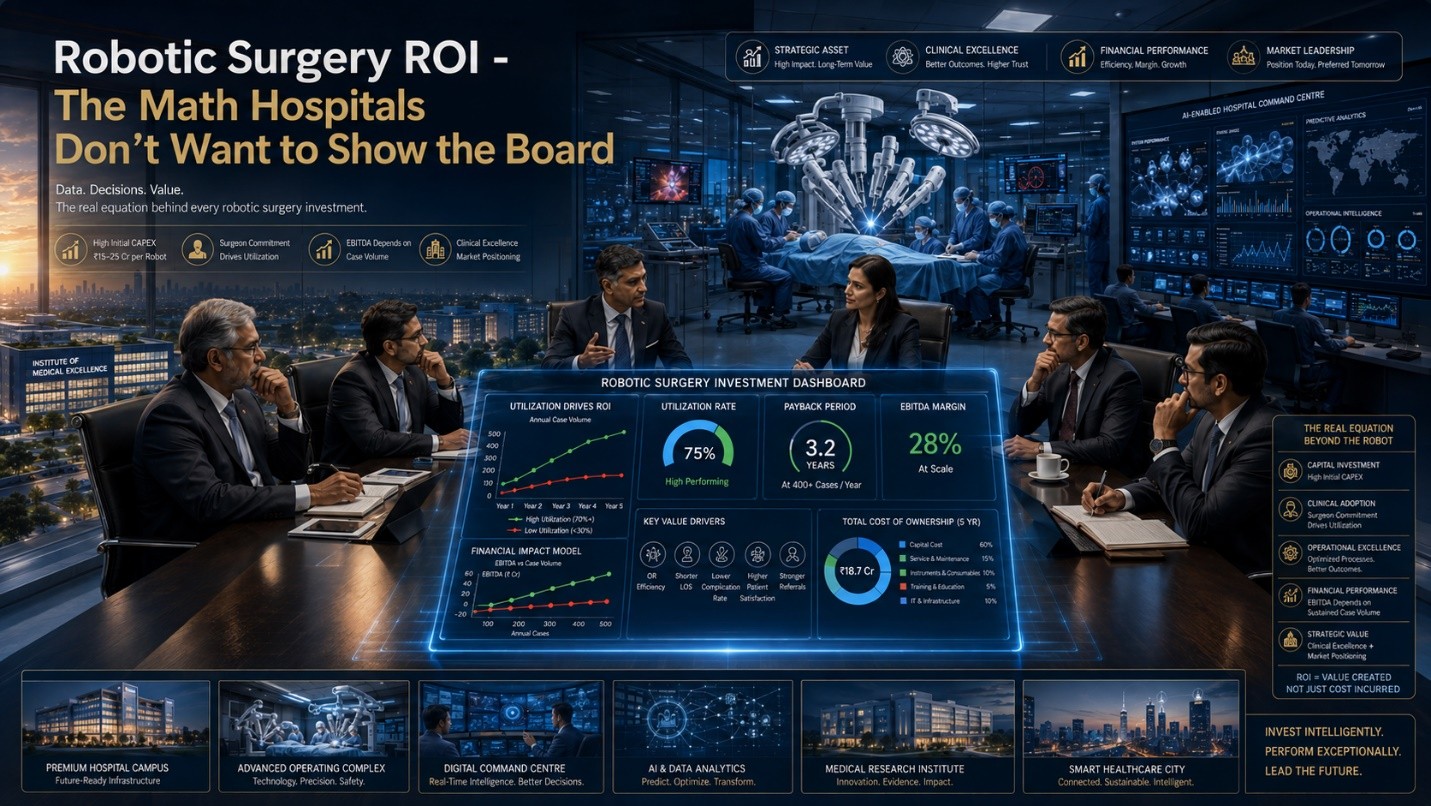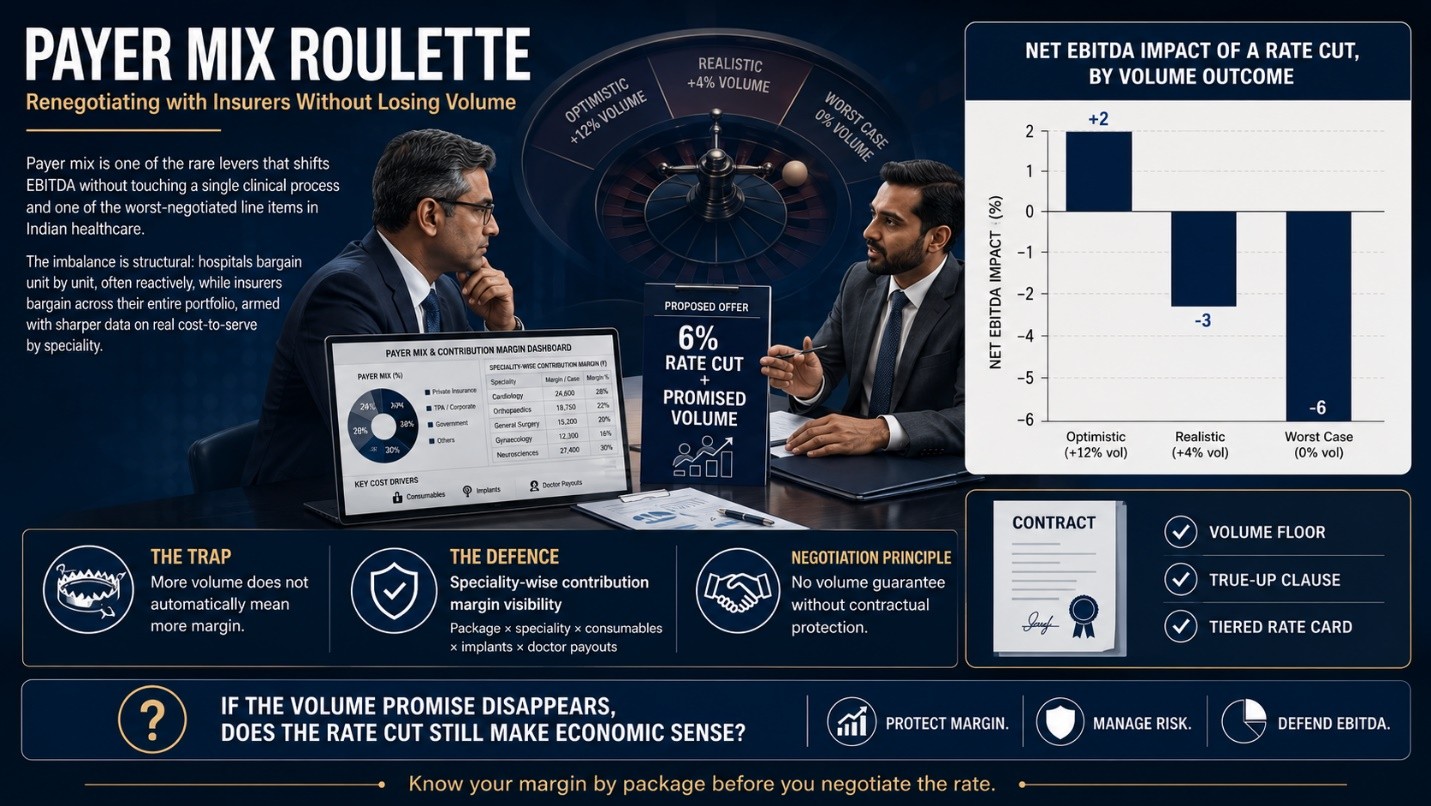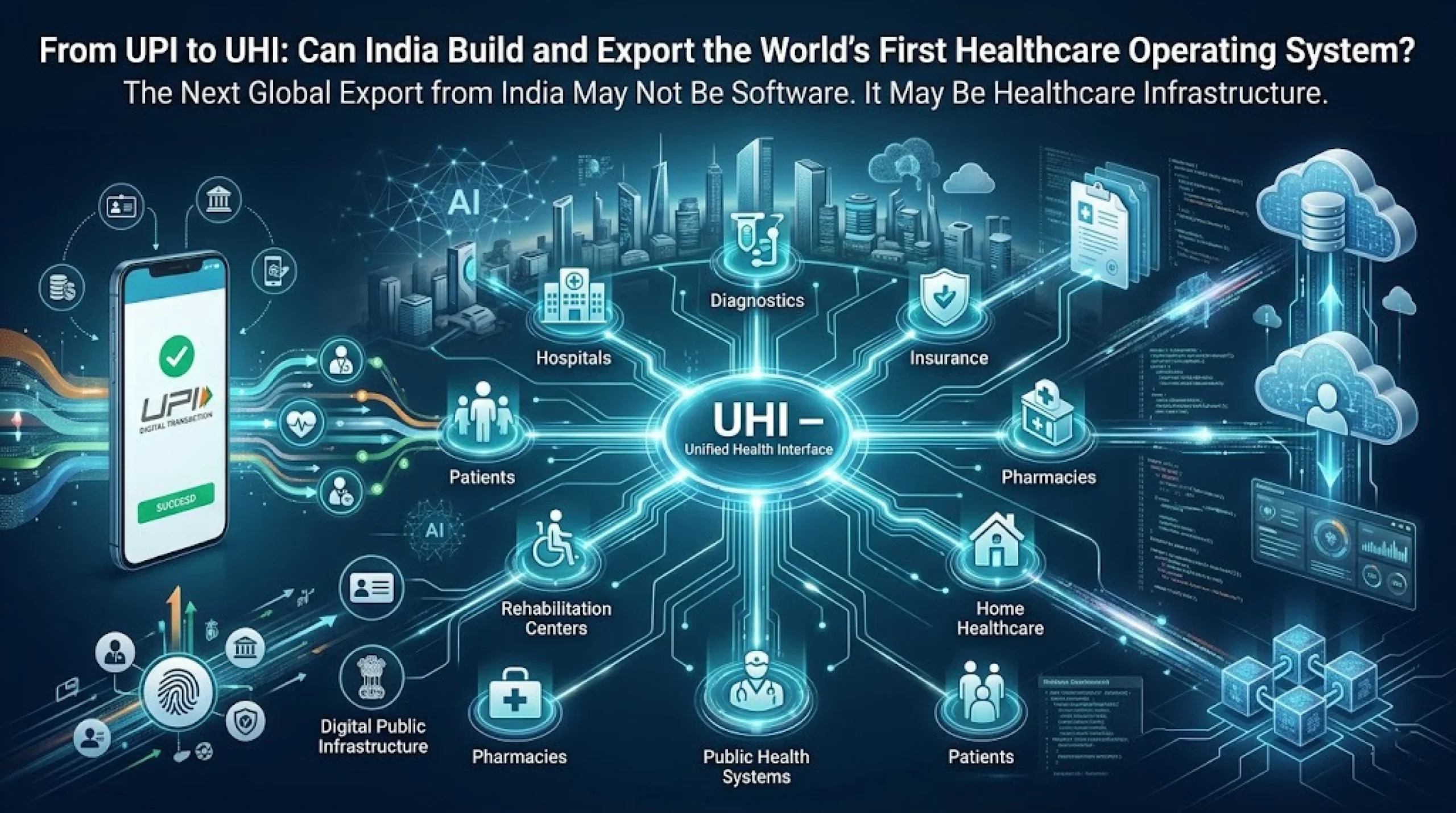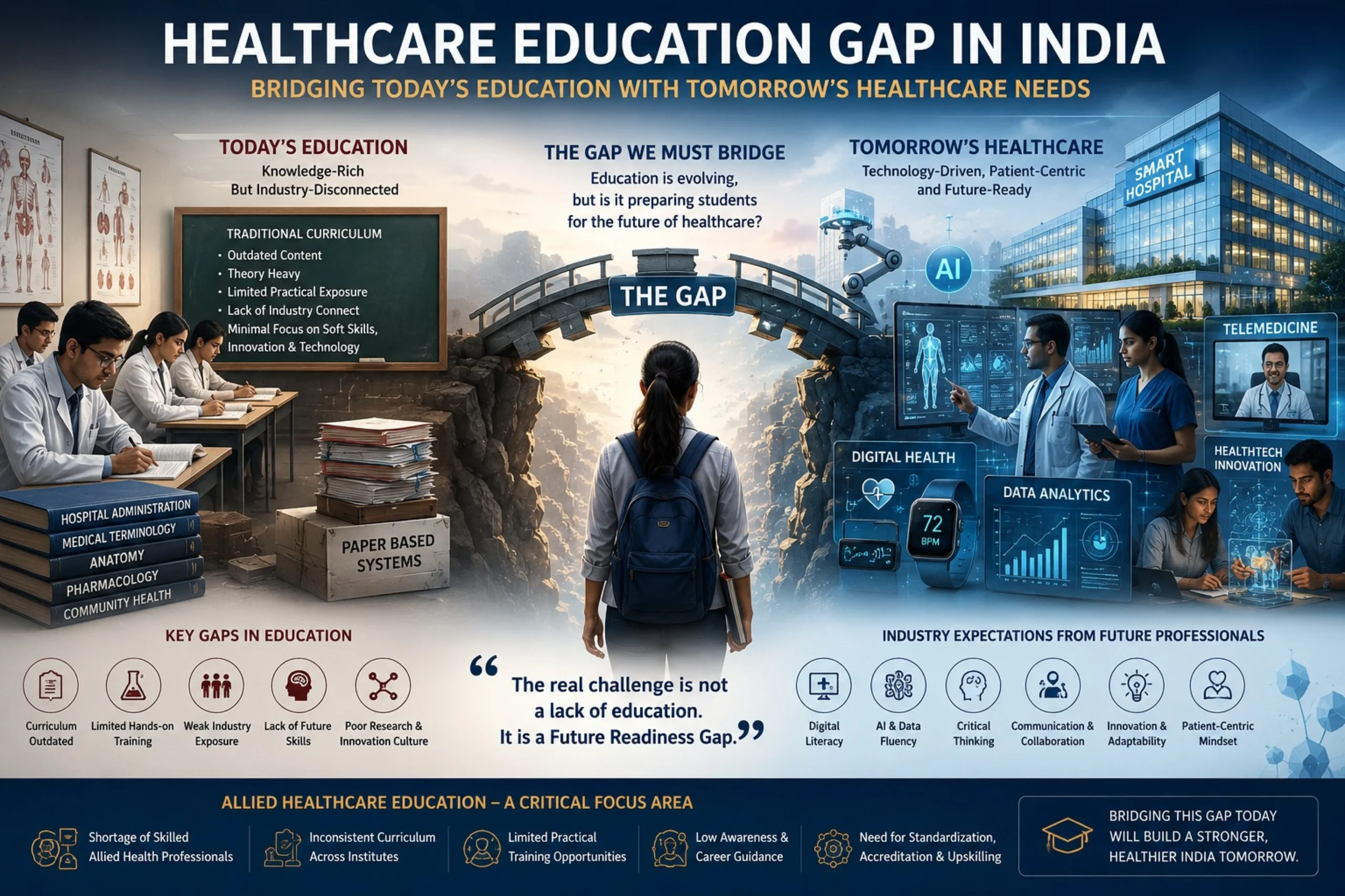
We talk about “healthcare” constantly, yet rarely stop to ask what the word actually means. Before we can revolutionise hospital workflows or deploy AI at the bedside, we have to unpack a quiet reality: our industry was built for sick-care, but its future demands wholeness.
“𝙏𝙝𝙚 𝙜𝙧𝙚𝙖𝙩𝙚𝙨𝙩 𝙙𝙖𝙣𝙜𝙚𝙧 𝙞𝙣 𝙩𝙞𝙢𝙚𝙨 𝙤𝙛 𝙩𝙪𝙧𝙗𝙪𝙡𝙚𝙣𝙘𝙚 𝙞𝙨 𝙣𝙤𝙩 𝙩𝙝𝙚 𝙩𝙪𝙧𝙗𝙪𝙡𝙚𝙣𝙘𝙚—𝙞𝙩 𝙞𝙨 𝙩𝙤 𝙖𝙘𝙩 𝙬𝙞𝙩𝙝 𝙮𝙚𝙨𝙩𝙚𝙧𝙙𝙖𝙮’𝙨 𝙡𝙤𝙜𝙞𝙘.” — Peter Drucker
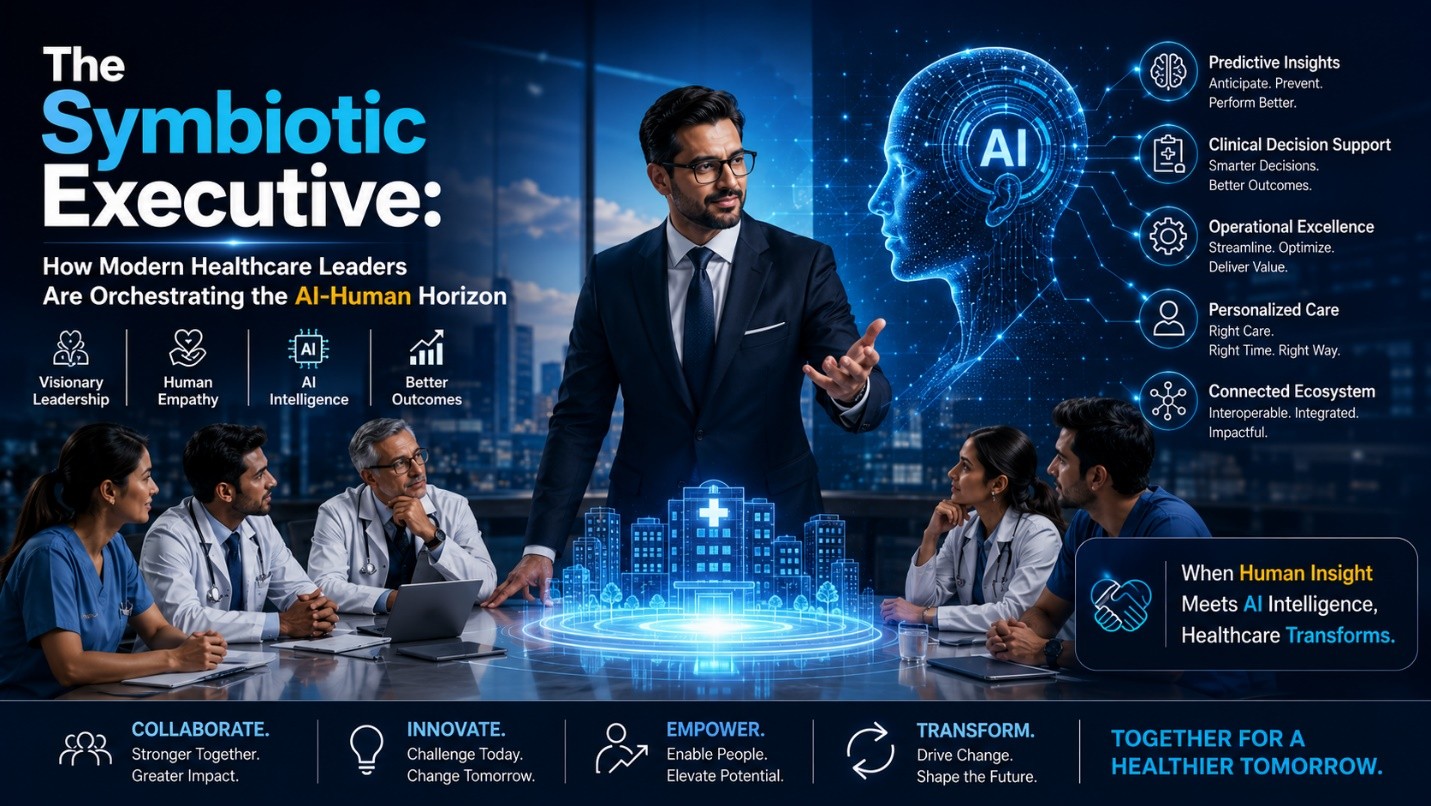
The traditional paradigm of hospital leadership—command-and-control governance focused purely on physical throughput —is rapidly becoming obsolete. Today’s most successful hospital executives are adopting a new model: The Symbiotic Executive. This approach balances high-tech predictive tools with high-touch human empathy to build resilient, adaptive health systems.
𝟭. 𝗧𝗮𝗰𝘁𝗶𝗰𝗮𝗹 𝗔𝗜 & 𝗦𝘆𝗺𝗯𝗶𝗼𝘁𝗶𝗰 𝗪𝗼𝗿𝗸𝗳𝗹𝗼𝘄𝘀: 𝗣𝗿𝗮𝗴𝗺𝗮𝘁𝗶𝘀𝗺 𝗢𝘃𝗲𝗿 𝗛𝘆𝗽𝗲
Healthcare leadership has shifted from generalised technological enthusiasm toward return-on-investment (ROI)-driven innovation. AI is deployed not to replace clinicians, but to liberate them from administrative overload.
• Targeted Capital Allocation: Health systems have invested nearly $1 billion in practical AI, with over $600 million directed toward ambient clinical documentation to reduce burnout and documentation fatigue.
• Shift to Agentic Systems: Over 80% of health systems are prioritising agentic AI—autonomous systems capable of navigating workflows—for clinical operations, care coordination, and revenue cycle management.
• The Cultural Adoption Gap: Up to 70% of AI-related change initiatives fail due to organisational pushback, 2. Human-Centered AI (HCAI) & Value-Based Transformation
Modern leaders 3. Decentralised Care Governance & Predictive Operations
Healthcare delivery is expanding beyond physical hospital walls. Executive strategies now encompass virtual platforms, remote monitoring networks, and decentralised care hubs—modelled on initiatives such as Saudi Arabia’s fully virtual hospital, which connects over 130 clinics. With telehealth usage remaining 38 times higher than pre-pandemic baselines, retail clinic visits surging by 25%, and 48% of consumers utilizing AI weekly, executives must lead hybrid physical-digital ecosystems seamlessly.
that advanced technology requires an equal investment in human factors. Transitioning from volume-based care to value-based care requires embedding trust, ethics, and transparency into every operation, and that change management and psychological safety are core leadership competencies.
“𝙀𝙢𝙥𝙤𝙬𝙚𝙧𝙢𝙚𝙣𝙩 𝙢𝙚𝙖𝙣𝙨 𝙙𝙚𝙨𝙞𝙜𝙣𝙞𝙣𝙜 𝘼𝙄 𝙩𝙤 𝙖𝙨𝙨𝙞𝙨𝙩 𝙘𝙡𝙞𝙣𝙞𝙘𝙞𝙖𝙣𝙨 𝙧𝙖𝙩𝙝𝙚𝙧 𝙩𝙝𝙖𝙣 𝙧𝙚𝙥𝙡𝙖𝙘𝙚 𝙩𝙝𝙚𝙢—𝙚𝙣𝙨𝙪𝙧𝙞𝙣𝙜 𝙩𝙚𝙘𝙝𝙣𝙤𝙡𝙤𝙜𝙮 𝙛𝙚𝙚𝙡𝙨 𝙡𝙞𝙠𝙚 𝙖 𝙨𝙪𝙥𝙥𝙤𝙧𝙩𝙞𝙫𝙚 𝙘𝙤𝙡𝙡𝙚𝙖𝙜𝙪𝙚 𝙧𝙖𝙩𝙝𝙚𝙧 𝙩𝙝𝙖𝙣 𝙖𝙣 𝙖𝙙𝙢𝙞𝙣𝙞𝙨𝙩𝙧𝙖𝙩𝙞𝙫𝙚 𝙢𝙖𝙣𝙙𝙖𝙩𝙚.”
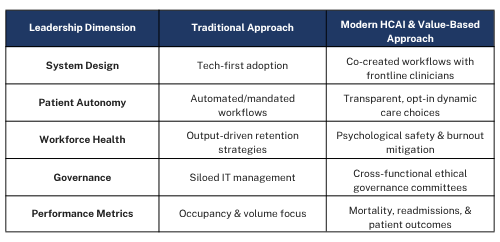
𝟮. 𝗛𝘂𝗺𝗮𝗻-𝗖𝗲𝗻𝘁𝗲𝗿𝗲𝗱 𝗔𝗜 (𝗛𝗖𝗔𝗜) & 𝗩𝗮𝗹𝘂𝗲-𝗕𝗮𝘀𝗲𝗱 𝗧𝗿𝗮𝗻𝘀𝗳𝗼𝗿𝗺𝗮𝘁𝗶𝗼𝗻
Modern leaders recognise that advanced technology requires an equal investment in human factors. Transitioning from volume-based care to value-based care requires embedding trust, ethics, and transparency into every operation.
𝟯. 𝗗𝗲𝗰𝗲𝗻𝘁𝗿𝗮𝗹𝗶𝘀𝗲𝗱 𝗖𝗮𝗿𝗲 𝗚𝗼𝘃𝗲𝗿𝗻𝗮𝗻𝗰𝗲 & 𝗣𝗿𝗲𝗱𝗶𝗰𝘁𝗶𝘃𝗲 𝗢𝗽𝗲𝗿𝗮𝘁𝗶𝗼𝗻𝘀
Healthcare delivery is expanding beyond physical hospital walls. Executive strategies now encompass virtual platforms, remote monitoring networks, and decentralised care hubs—modelled on initiatives such as Saudi Arabia’s fully virtual hospital, which connects over 130 clinics. With telehealth usage remaining 38 times higher than pre-pandemic baselines, retail clinic visits surging by 25%, and 48% of consumers 4. Evidence-Based Research & Leadership Impact
Recent data highlights how transformational leadership directly drives operational performance: AI weekly, executives must lead hybrid physical-digital ecosystems seamlessly.

By leveraging digital twins—virtual replicas of hospital systems—executive teams can model scenario-based staffing, stress-test emergency capacity, and eliminate operational bottlenecks proactively.
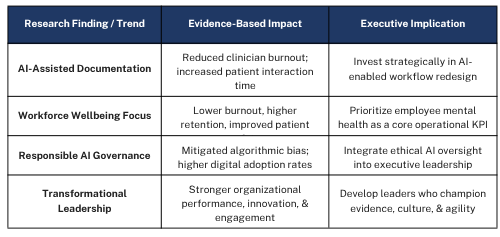
𝟰. 𝗘𝘃𝗶𝗱𝗲𝗻𝗰𝗲-𝗕𝗮𝘀𝗲𝗱 𝗥𝗲𝘀𝗲𝗮𝗿𝗰𝗵 & 𝗟𝗲𝗮𝗱𝗲𝗿𝘀𝗵𝗶𝗽 𝗜𝗺𝗽𝗮𝗰𝘁
Recent data highlights how transformational leadership directly drives operational performance:
𝗦𝘁𝗿𝗮𝘁𝗲𝗴𝗶𝗰 𝗣𝗶𝗹𝗹𝗮𝗿𝘀 𝗳𝗼𝗿 𝗛𝗼𝘀𝗽𝗶𝘁𝗮𝗹 𝗟𝗲𝗮𝗱𝗲𝗿𝘀𝗵𝗶𝗽 𝗧𝗿𝗮𝗻𝘀𝗳𝗼𝗿𝗺𝗮𝘁𝗶𝗼𝗻
• Lead with Empathy, Scale with AI: Measure tech investments by the clinical time they return to direct patient care.
• Prioritise Cultural Readiness: Bridge the 70% adoption gap through interdisciplinary co-creation and trust.
• Shift to Value and Prevention: Move from reactive treatment to proactive population health management.
• Care for the Caregivers: Address workforce shortages by treating staff wellbeing as an organisational priority.
• Commit to Sustainable Governance: Build transparent AI governance while leading environmentally sustainable “green hospital” initiatives.
𝗖𝗼𝗻𝗰𝗹𝘂𝘀𝗶𝗼𝗻:
The hospitals that thrive in the coming decade will not necessarily be the largest or the most technologically advanced. They will be those led by visionary leaders who embrace innovation while preserving the fundamental human values of empathy, trust, collaboration, and service.
𝙏𝙧𝙖𝙣𝙨𝙛𝙤𝙧𝙢𝙞𝙣𝙜 𝙡𝙚𝙖𝙙𝙚𝙧𝙨𝙝𝙞𝙥 𝙞𝙨 𝙣𝙤 𝙡𝙤𝙣𝙜𝙚𝙧 𝙖𝙣 𝙤𝙥𝙩𝙞𝙤𝙣—𝙞𝙩 𝙞𝙨 𝙩𝙝𝙚 𝙛𝙤𝙪𝙣𝙙𝙖𝙩𝙞𝙤𝙣 𝙛𝙤𝙧 𝙗𝙪𝙞𝙡𝙙𝙞𝙣𝙜 𝙧𝙚𝙨𝙞𝙡𝙞𝙚𝙣𝙩, 𝙞𝙣𝙩𝙚𝙡𝙡𝙞𝙜𝙚𝙣𝙩, 𝙖𝙣𝙙 𝙘𝙤𝙢𝙥𝙖𝙨𝙨𝙞𝙤𝙣𝙖𝙩𝙚 𝙝𝙤𝙨𝙥𝙞𝙩𝙖𝙡𝙨 𝙘𝙖𝙥𝙖𝙗𝙡𝙚 𝙤𝙛 𝙢𝙚𝙚𝙩𝙞𝙣𝙜 𝙩𝙝𝙚 𝙘𝙝𝙖𝙡𝙡𝙚𝙣𝙜𝙚𝙨 𝙤𝙛 𝙩𝙤𝙢𝙤𝙧𝙧𝙤𝙬.
Dr. Sudipta Banerjee — Healthcare Strategist, Director Vision Into Action Council