For more than a century, hospitals have been led by administrators whose primary mandate was to optimise infrastructure, improve occupancy, control costs, ensure regulatory compliance, and maintain operational efficiency. While these responsibilities remain fundamental, they are no longer sufficient to address the realities of modern healthcare. Today, healthcare value is increasingly created across interconnected networks rather than within the four walls of a hospital.
This transformation demands a new leadership paradigm—the 𝗖𝗵𝗶𝗲𝗳 𝗘𝗰𝗼𝘀𝘆𝘀𝘁𝗲𝗺 𝗢𝗳𝗳𝗶𝗰𝗲𝗿 (𝗖𝗘𝗢 𝟮.𝟬).
This is not a rebranding of the traditional Chief Executive Officer. It is a strategic evolution from managing institutions to orchestrating healthcare ecosystems.
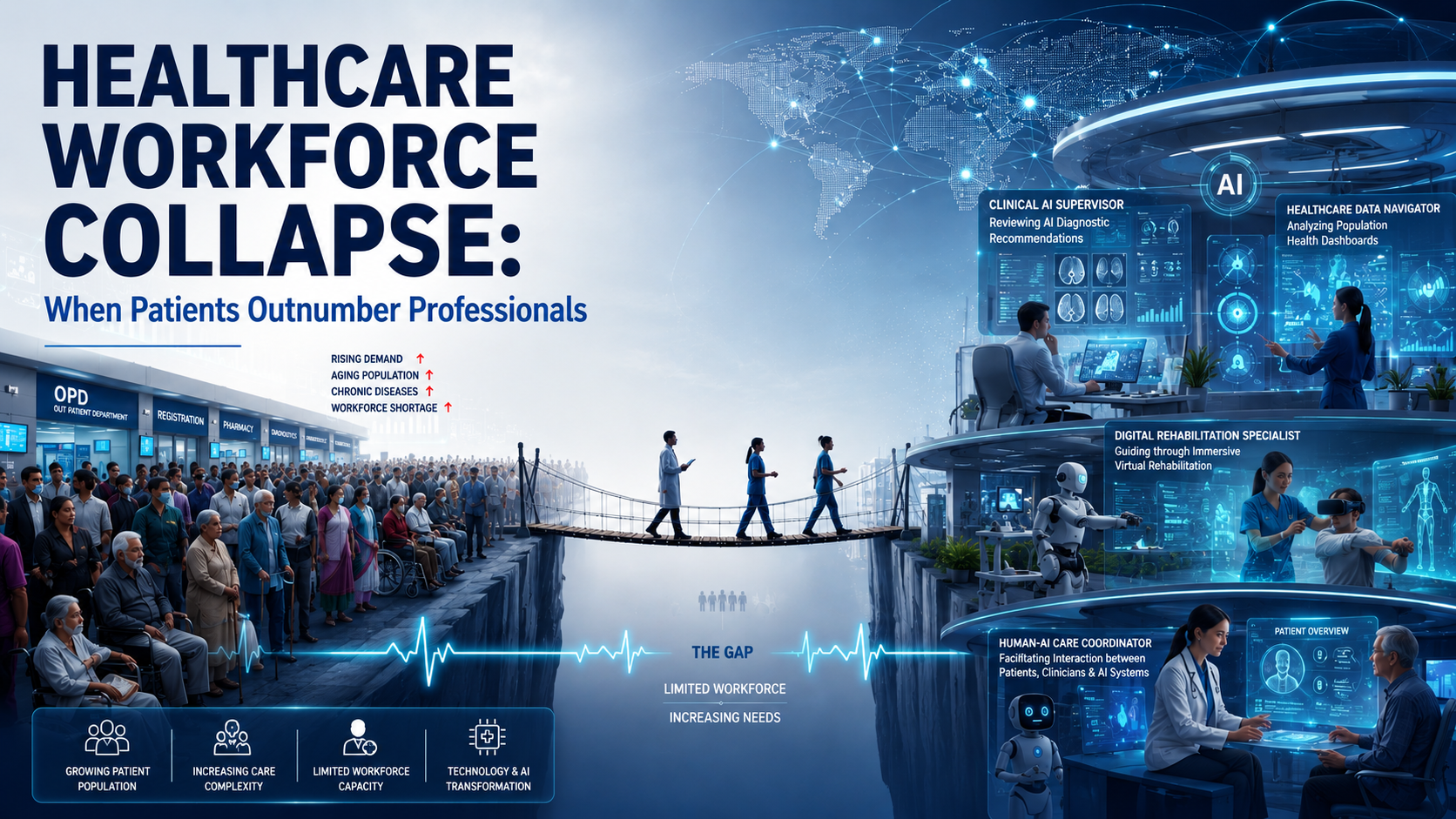
Healthcare’s most complex challenges—including ageing populations, chronic diseases, workforce shortages, rising costs, and digital transformation—cannot be solved by hospitals acting independently. According to the 𝗪𝗼𝗿𝗹𝗱 𝗛𝗲𝗮𝗹𝘁𝗵 𝗢𝗿𝗴𝗮𝗻𝗶𝘇𝗮𝘁𝗶𝗼𝗻 (𝗪𝗛𝗢), non-communicable diseases account for approximately 𝟳𝟰% 𝗼𝗳 𝗮𝗹𝗹 𝗴𝗹𝗼𝗯𝗮𝗹 𝗱𝗲𝗮𝘁𝗵𝘀, while the global health workforce is projected to face a shortage of nearly 𝟭𝟬 𝗺𝗶𝗹𝗹𝗶𝗼𝗻 𝗽𝗿𝗼𝗳𝗲𝘀𝘀𝗶𝗼𝗻𝗮𝗹𝘀 𝗯𝘆 𝟮𝟬𝟯𝟬. At the same time, digital health, artificial intelligence, genomics, home-based care, and precision medicine are fundamentally changing how healthcare is delivered.
Healthcare is no longer an industry of isolated providers—it is becoming an interconnected ecosystem.
The emerging hospital leader must therefore shift from asking, “𝗛𝗼𝘄 𝗲𝗳𝗳𝗶𝗰𝗶𝗲𝗻𝘁𝗹𝘆 𝗱𝗼𝗲𝘀 𝗺𝘆 𝗵𝗼𝘀𝗽𝗶𝘁𝗮𝗹 𝗼𝗽𝗲𝗿𝗮𝘁𝗲?” to “𝗛𝗼𝘄 𝗲𝗳𝗳𝗲𝗰𝘁𝗶𝘃𝗲𝗹𝘆 𝗶𝘀 𝗺𝘆 𝗵𝗼𝘀𝗽𝗶𝘁𝗮𝗹 𝗰𝗼𝗻𝗻𝗲𝗰𝘁𝗲𝗱?”
This distinction defines the Chief Ecosystem Officer.
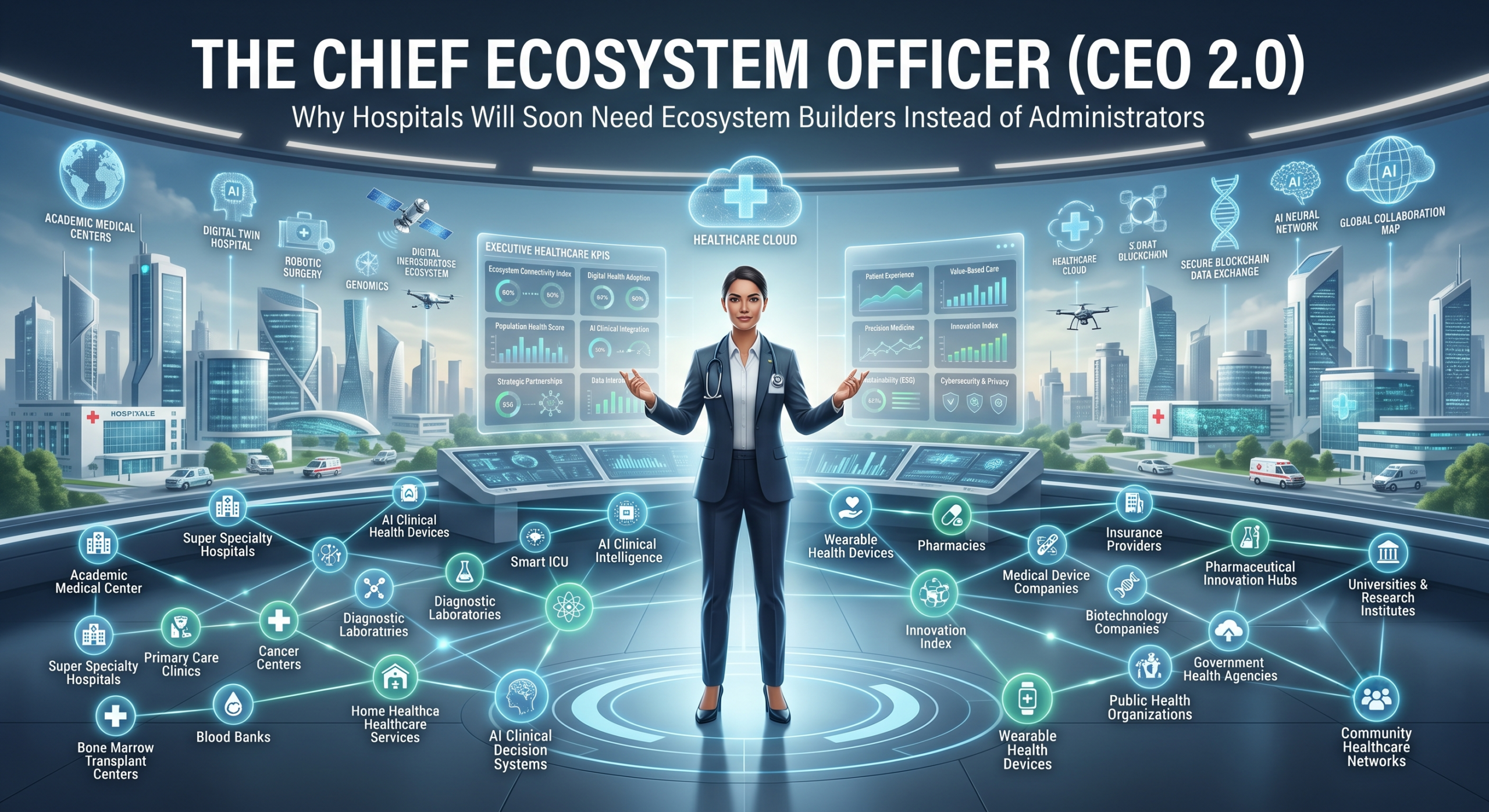
Unlike the traditional administrator, who focuses primarily on internal operations, the Chief Ecosystem Officer creates value by building strategic partnerships across hospitals, primary care providers, diagnostic networks, insurers, pharmaceutical companies, medical technology firms, academic institutions, digital health startups, public health agencies, home healthcare providers, and community organisations. Competitive advantage will increasingly depend not on the assets a hospital owns, but on the ecosystem it can successfully orchestrate.
This shift is already visible globally. Healthcare organisations are moving beyond mergers and acquisitions toward collaborative ecosystems built on shared data, integrated care pathways, and aligned incentives. International analyses by organisations such as the 𝗪𝗼𝗿𝗹𝗱 𝗘𝗰𝗼𝗻𝗼𝗺𝗶𝗰 𝗙𝗼𝗿𝘂𝗺, 𝗠𝗰𝗞𝗶𝗻𝘀𝗲𝘆 & 𝗖𝗼𝗺𝗽𝗮𝗻𝘆, 𝗗𝗲𝗹𝗼𝗶𝘁𝘁𝗲, and 𝗕𝗖𝗚 consistently emphasise that future healthcare systems will be platform-based, digitally connected, and partnership-driven rather than institution-centric.
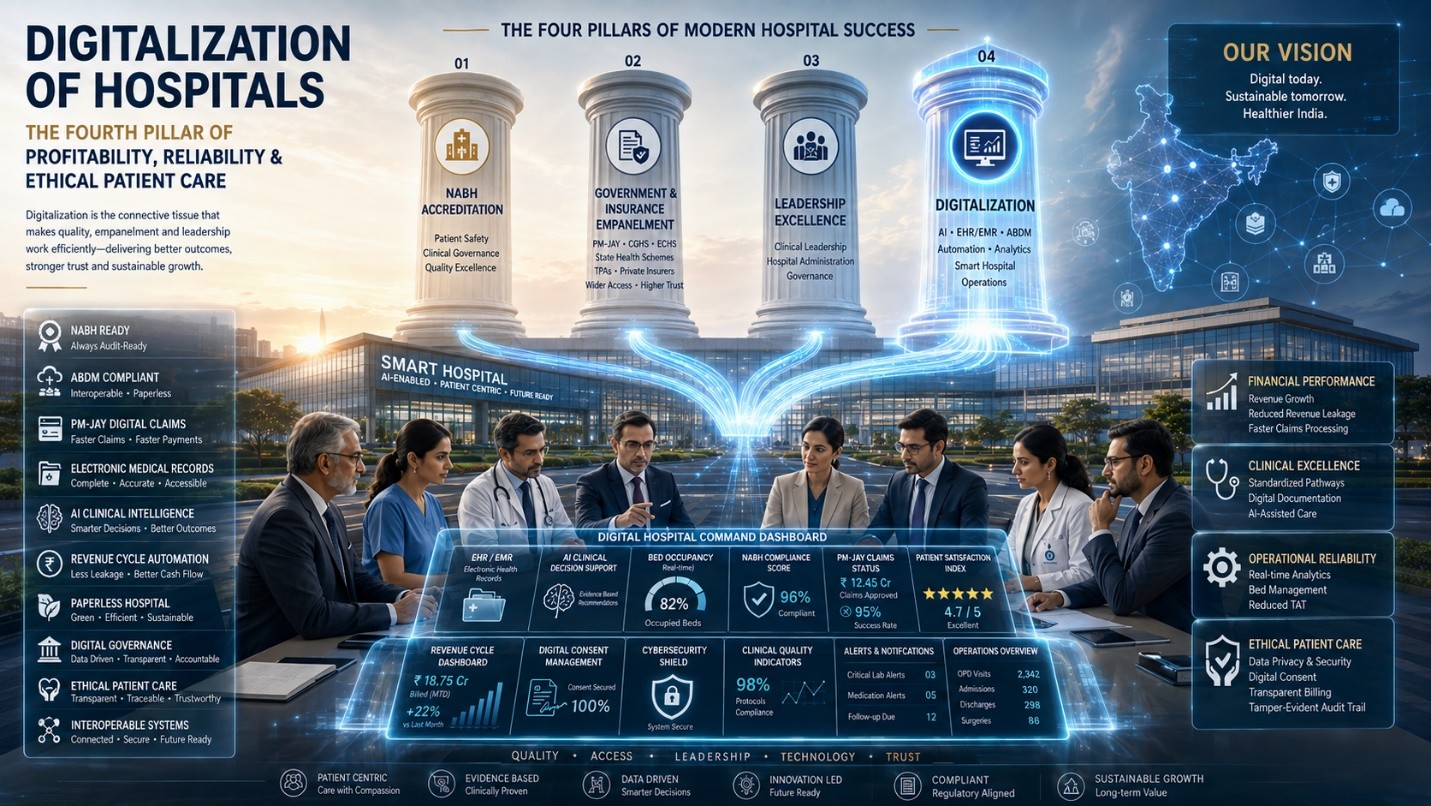
The rapid expansion of digital health reinforces this transition. The global digital health market now exceeds 𝗨𝗦$𝟯𝟬𝟬 𝗯𝗶𝗹𝗹𝗶𝗼𝗻, driven by artificial intelligence, remote patient monitoring, interoperable health records, digital therapeutics, and virtual care. These technologies generate their greatest value only when they function across organisations rather than within isolated hospital environments. India’s 𝗔𝘆𝘂𝘀𝗵𝗺𝗮𝗻 𝗕𝗵𝗮𝗿𝗮𝘁 𝗗𝗶𝗴𝗶𝘁𝗮𝗹 𝗠𝗶𝘀𝘀𝗶𝗼𝗻 (𝗔𝗕𝗗𝗠) reflects this direction by creating a national digital health architecture that enables secure, interoperable healthcare delivery across multiple stakeholders.
In this environment, the Chief Ecosystem Officer assumes responsibilities that extend far beyond hospital administration. The role includes designing long-term strategic partnerships, integrating emerging technologies into clinical practice, developing regional referral and speciality-care networks, creating frameworks for trusted data sharing, strengthening collaboration with public health systems, academia, and industry, and aligning diverse stakeholders around measurable patient outcomes.
Success will therefore be measured differently. Traditional indicators such as occupancy rates, average length of stay, operating margins, and procedure volumes will remain important, but they will no longer define institutional excellence. Future healthcare leaders will also be evaluated on ecosystem maturity, strategic partnerships, digital interoperability, innovation adoption, research collaborations, population health outcomes, patient lifetime engagement, and the ability to generate value across an integrated care network.
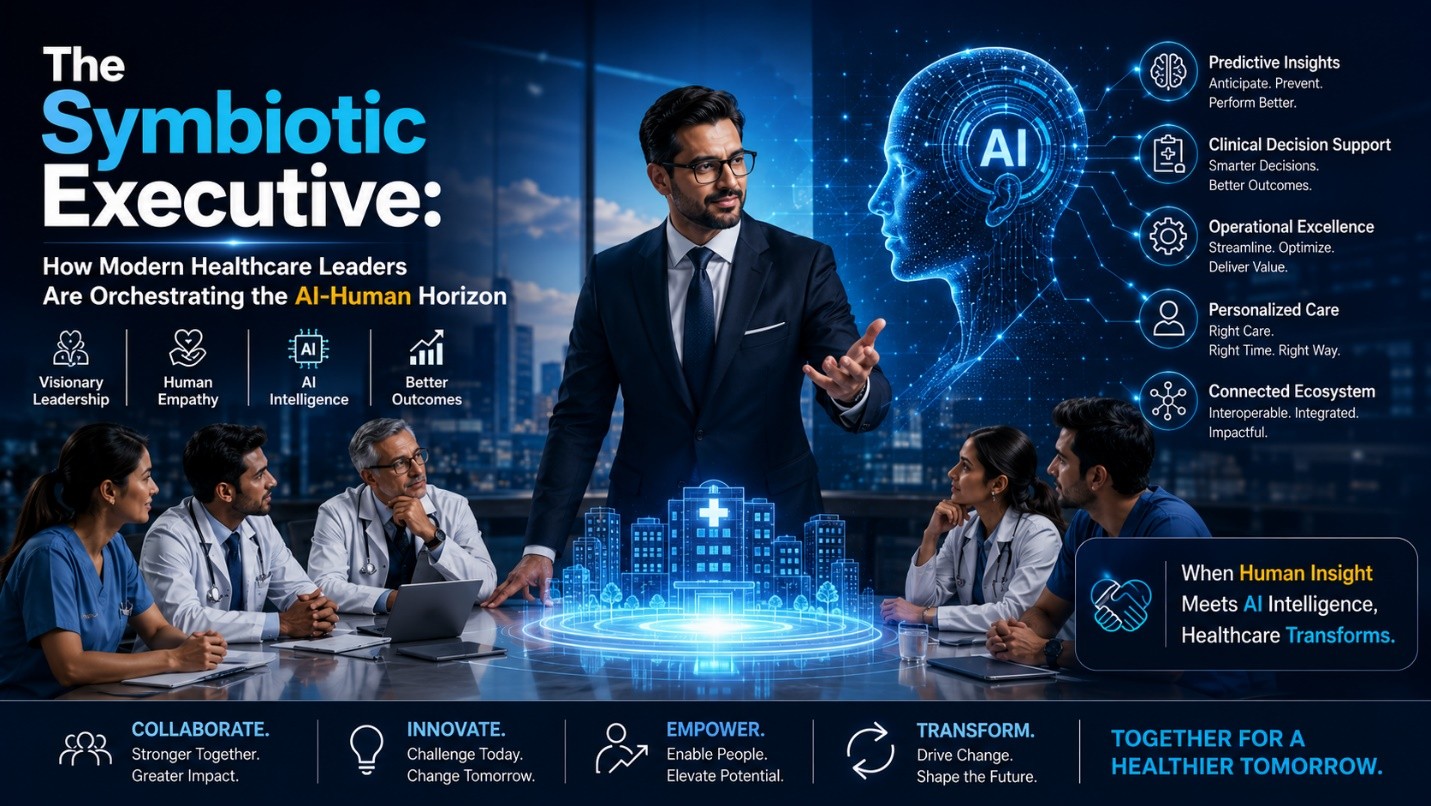
Perhaps the most significant change lies in leadership philosophy. The traditional administrator functioned as a gatekeeper—controlling resources, processes, and organisational boundaries. The Chief Ecosystem Officer becomes an orchestrator, cultivating trust, enabling collaboration, and connecting organisations that were once viewed simply as vendors, competitors, or referral sources into a coordinated healthcare network.
Healthcare’s next decade will not be defined by who owns the largest hospital campus or the most sophisticated medical equipment. It will be defined by who builds the strongest, most trusted, and most intelligent healthcare ecosystem.
Boards of directors must therefore rethink what executive leadership means. The healthcare organisations that will lead the future are unlikely to be those with the largest physical infrastructure; they will be those capable of integrating technology, data, research, public health, industry, and patient communities into a seamless continuum of care.
The 𝗖𝗵𝗶𝗲𝗳 𝗘𝗰𝗼𝘀𝘆𝘀𝘁𝗲𝗺 𝗢𝗳𝗳𝗶𝗰𝗲𝗿 (𝗖𝗘𝗢 𝟮.𝟬) is not simply a new executive title—it is the leadership model required for the next era of healthcare. As hospitals evolve into intelligent, connected health ecosystems, the most valuable leaders will no longer be those who merely manage organisations. They will be those who build partnerships, foster innovation, create trust, and orchestrate collaborative networks that improve health outcomes at scale.
𝗧𝗵𝗲 𝗵𝗼𝘀𝗽𝗶𝘁𝗮𝗹 𝗼𝗳 𝘁𝗵𝗲 𝗳𝘂𝘁𝘂𝗿𝗲 𝘄𝗶𝗹𝗹 𝗻𝗼𝘁 𝗰𝗼𝗺𝗽𝗲𝘁𝗲 𝗮𝘀 𝗮 𝘀𝘁𝗮𝗻𝗱𝗮𝗹𝗼𝗻𝗲 𝗶𝗻𝘀𝘁𝗶𝘁𝘂𝘁𝗶𝗼𝗻. 𝗜𝘁 𝘄𝗶𝗹𝗹 𝘀𝘂𝗰𝗰𝗲𝗲𝗱 𝗮𝘀 𝘁𝗵𝗲 𝘁𝗿𝘂𝘀𝘁𝗲𝗱 𝗵𝘂𝗯 𝗼𝗳 𝗮𝗻 𝗶𝗻𝘁𝗲𝗴𝗿𝗮𝘁𝗲𝗱 𝗵𝗲𝗮𝗹𝘁𝗵𝗰𝗮𝗿𝗲 𝗲𝗰𝗼𝘀𝘆𝘀𝘁𝗲𝗺—𝗮𝗻𝗱 𝗶𝘁𝘀 𝗹𝗲𝗮𝗱𝗲𝗿 𝘄𝗶𝗹𝗹 𝗯𝗲 𝘁𝗵𝗲 𝗖𝗵𝗶𝗲𝗳 𝗘𝗰𝗼𝘀𝘆𝘀𝘁𝗲𝗺 𝗢𝗳𝗳𝗶𝗰𝗲𝗿.
By Mr Vijay Sonam, Co-Founder, Healthcare Leaders Collective Foundation (HLCF), Deputy Director, Eminent Haspatal Pvt Ltd