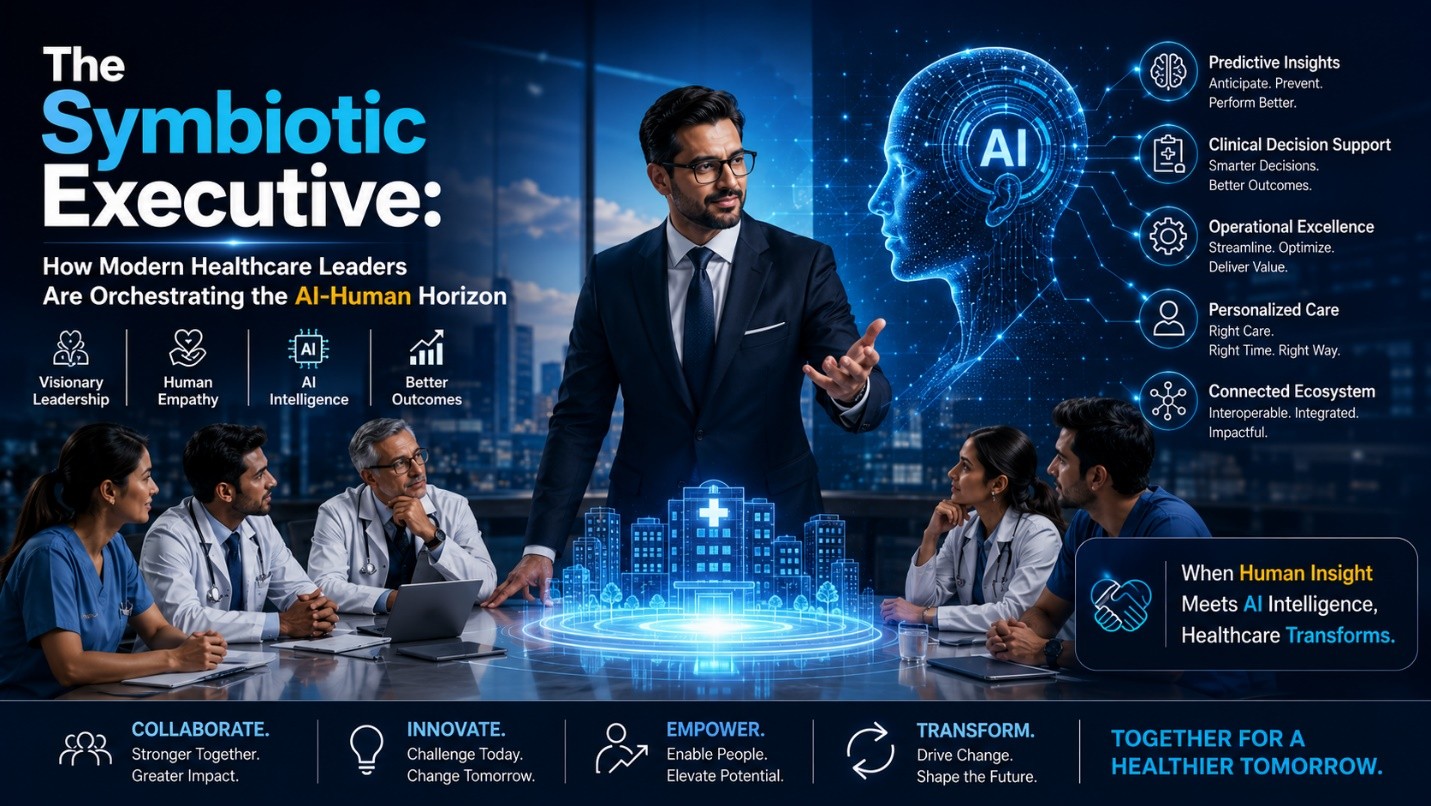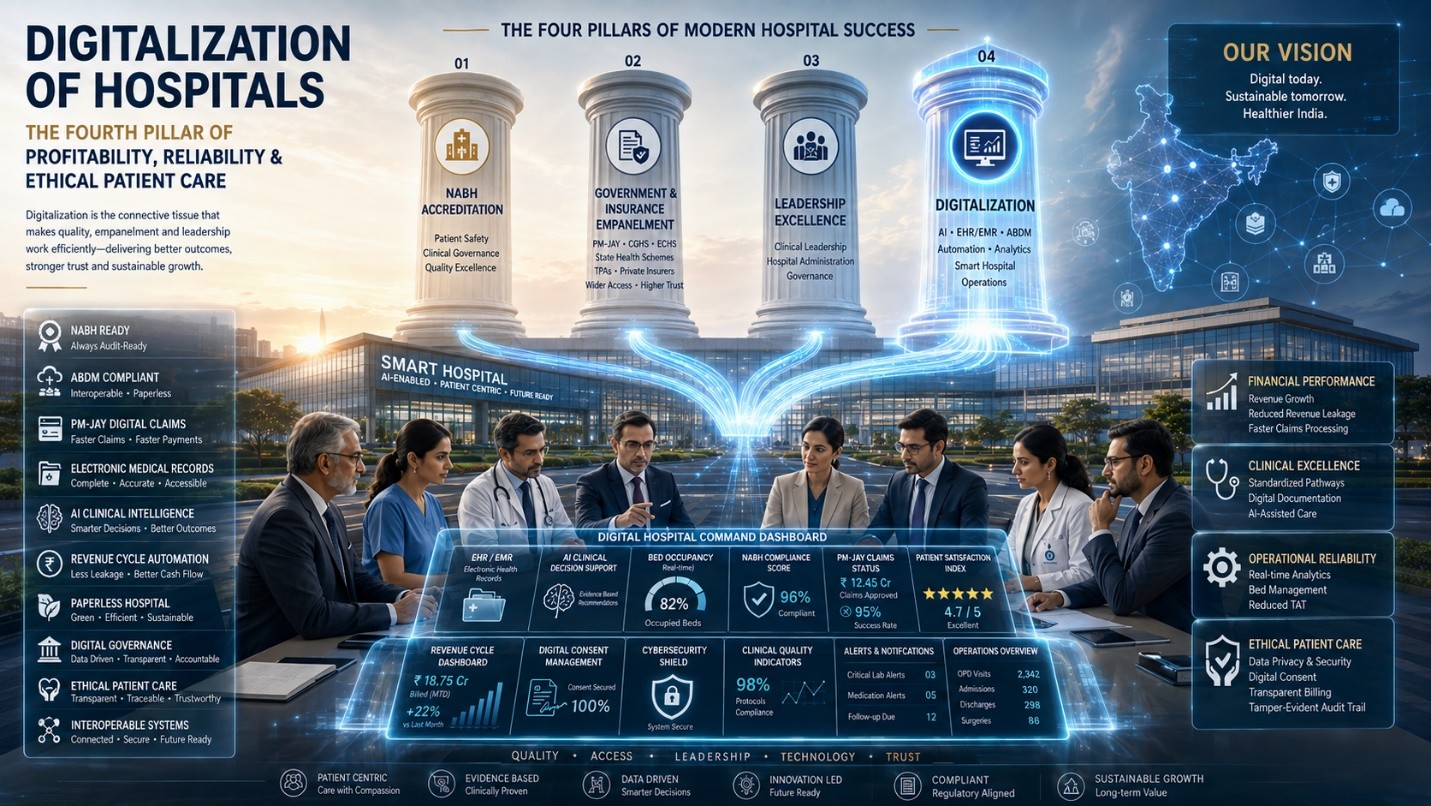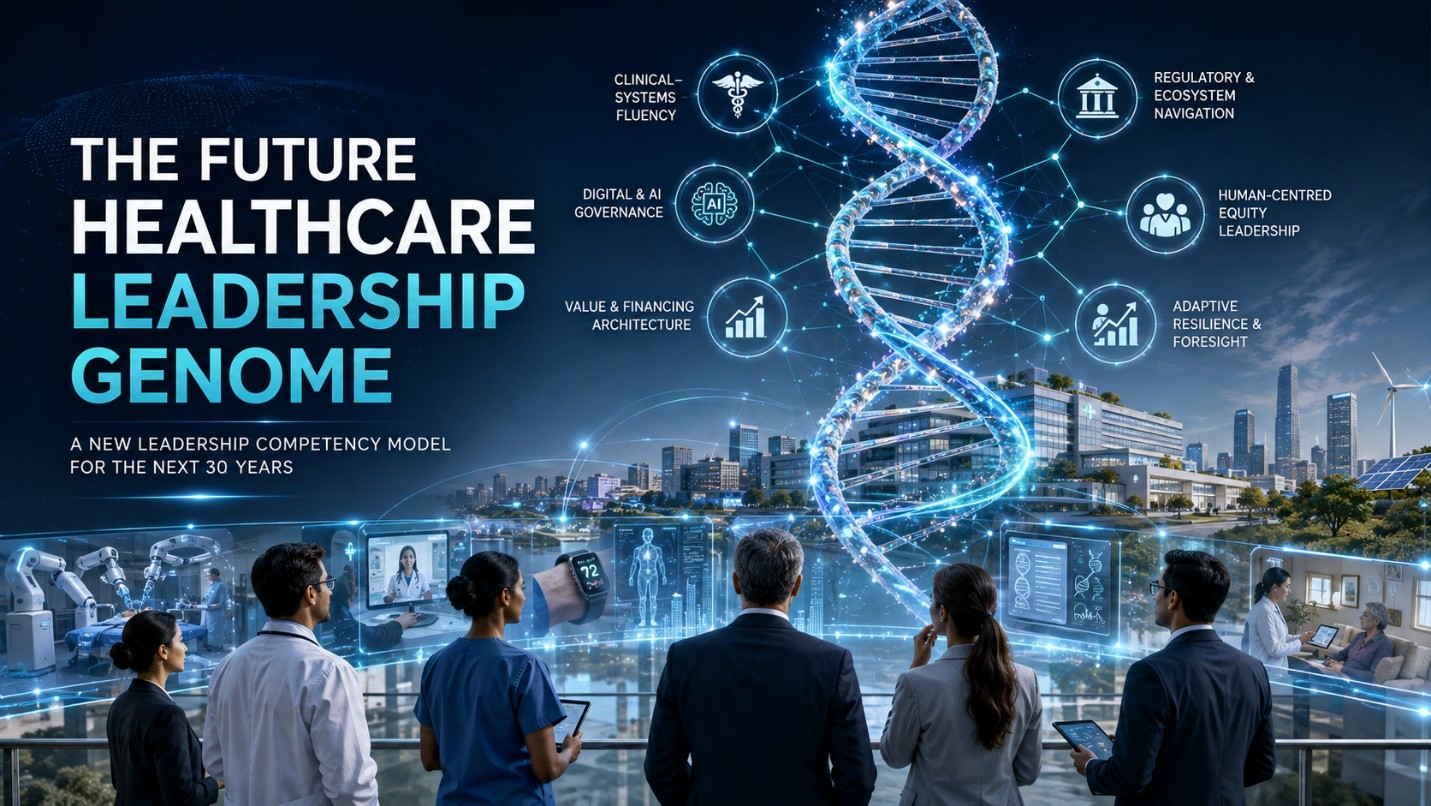
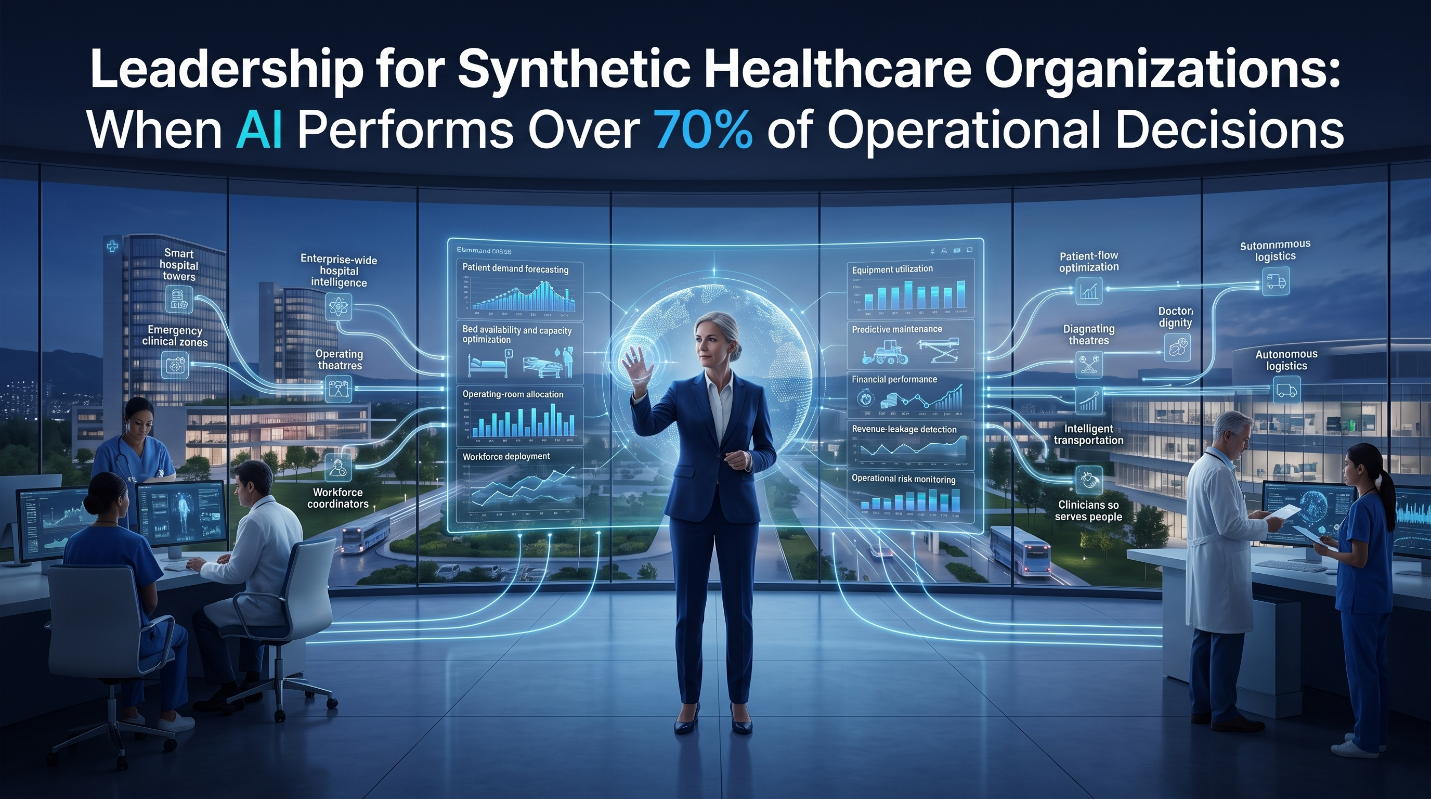
Imagine a hospital where artificial intelligence continuously forecasts patient volumes, allocates operating-room capacity, optimises workforce deployment, predicts equipment failure, manages inventory, identifies revenue leakage and adjusts patient-flow priorities.
The CEO remains accountable. Clinicians remain responsible for clinical judgment. People remain at the centre of care. But AI-enabled systems generate, recommend, or execute more than 70% of routine operational decisions – 𝙏𝙝𝙞𝙨 𝙞𝙨 𝙩𝙝𝙚 𝙚𝙢𝙚𝙧𝙜𝙞𝙣𝙜 𝙘𝙤𝙣𝙘𝙚𝙥𝙩 𝙤𝙛 𝙖 𝙎𝙮𝙣𝙩𝙝𝙚𝙩𝙞𝙘 𝙃𝙚𝙖𝙡𝙩𝙝𝙘𝙖𝙧𝙚 𝙊𝙧𝙜𝙖𝙣𝙞𝙯𝙖𝙩𝙞𝙤𝙣.
𝗙𝗿𝗼𝗺 𝗗𝗶𝗴𝗶𝘁𝗮𝗹 𝗛𝗼𝘀𝗽𝗶𝘁𝗮𝗹 𝘁𝗼 𝗦𝘆𝗻𝘁𝗵𝗲𝘁𝗶𝗰 𝗢𝗿𝗴𝗮𝗻𝗶𝘇𝗮𝘁𝗶𝗼𝗻
The 70% threshold is not a prediction or a prescribed target. It is a strategic thought experiment: what happens to healthcare leadership when AI moves from being a management tool to becoming an active participant in organisational decision-making?
𝙏𝙝𝙚 𝙦𝙪𝙚𝙨𝙩𝙞𝙤𝙣 𝙩𝙝𝙚𝙣 𝙘𝙝𝙖𝙣𝙜𝙚𝙨 𝙛𝙪𝙣𝙙𝙖𝙢𝙚𝙣𝙩𝙖𝙡𝙡𝙮: 𝘞𝘩𝘦𝘯 𝘮𝘢𝘤𝘩𝘪𝘯𝘦𝘴 𝘮𝘢𝘬𝘦 𝘮𝘰𝘴𝘵 𝘰𝘱𝘦𝘳𝘢𝘵𝘪𝘰𝘯𝘢𝘭 𝘥𝘦𝘤𝘪𝘴𝘪𝘰𝘯𝘴, 𝘸𝘩𝘢𝘵 𝘦𝘹𝘢𝘤𝘵𝘭𝘺 𝘴𝘩𝘰𝘶𝘭𝘥 𝘭𝘦𝘢𝘥𝘦𝘳𝘴 𝘭𝘦𝘢𝘥?
A digital hospital digitises processes. An intelligent hospital uses data and analytics to improve decisions. A synthetic healthcare organisation goes further: human and machine intelligence become structurally integrated into the operating model.
AI could continuously analyse thousands of variables—patient demand, bed availability, staffing, inventory, scheduling, financial performance, equipment utilisation and operational risk.
WHO recognises the potential of AI across health administration, diagnosis, patient care, drug development and public health, while emphasising the importance of governance, equity, privacy, regulation and human oversight. The transformation, therefore, is not merely technological – 𝗜𝘁 𝗶𝘀 𝗼𝗿𝗴𝗮𝗻𝗶𝘀𝗮𝘁𝗶𝗼𝗻𝗮𝗹.
𝗧𝗵𝗲 𝟳𝟬% 𝗟𝗲𝗮𝗱𝗲𝗿𝘀𝗵𝗶𝗽 𝗧𝗵𝗿𝗲𝘀𝗵𝗼𝗹𝗱
𝟭. 𝗔𝗜 𝗚𝗼𝘃𝗲𝗿𝗻𝗮𝗻𝗰𝗲 𝗟𝗲𝗮𝗱𝗲𝗿𝘀𝗵𝗶𝗽: Future healthcare leaders do not necessarily need to become AI engineers. They need sufficient AI fluency to govern systems responsibly. High-impact AI requires defined accountability, validation, monitoring, escalation mechanisms, auditability and continuous performance assessment.
WHO’s guidance on AI and large multimodal models highlights concerns including inaccurate outputs, biased data, automation bias and cybersecurity vulnerabilities, reinforcing the need for responsible governance and human oversight. 𝗧𝗵𝗲 𝗳𝘂𝘁𝘂𝗿𝗲 𝗖𝗘𝗢 𝘁𝗵𝗲𝗿𝗲𝗳𝗼𝗿𝗲 𝗯𝗲𝗰𝗼𝗺𝗲𝘀 𝗮𝗻 𝗔𝗜 𝗴𝗼𝘃𝗲𝗿𝗻𝗮𝗻𝗰𝗲 𝗮𝗿𝗰𝗵𝗶𝘁𝗲𝗰𝘁.
When AI performs the majority of routine operational decisions, leadership itself must be redesigned.
Traditional management asks: “What should my team do?”
Synthetic leadership asks: “What should AI decide, what should humans decide, what should humans supervise, and where must AI never decide alone?”
𝗧𝗵𝗶𝘀 𝗰𝗿𝗲𝗮𝘁𝗲𝘀 𝗮 𝗻𝗲𝘄 𝗱𝗶𝘀𝗰𝗶𝗽𝗹𝗶𝗻𝗲: 𝗱𝗲𝗰𝗶𝘀𝗶𝗼𝗻-𝗿𝗶𝗴𝗵𝘁𝘀 𝗮𝗿𝗰𝗵𝗶𝘁𝗲𝗰𝘁𝘂𝗿𝗲.
𝟮. 𝗛𝘂𝗺𝗮𝗻–𝗠𝗮𝗰𝗵𝗶𝗻𝗲 𝗗𝗲𝗰𝗶𝘀𝗶𝗼𝗻 𝗗𝗲𝘀𝗶𝗴𝗻
Not every decision should be automated. A synthetic organisation requires clear decision boundaries.
Low-risk operational decisions may be automated. Medium-risk decisions may require human supervision. High-risk clinical, ethical, financial and strategic decisions may require explicit human authority.
The essential question is not: “𝘊𝘢𝘯 𝘈𝘐 𝘮𝘢𝘬𝘦 𝘵𝘩𝘪𝘴 𝘥𝘦𝘤𝘪𝘴𝘪𝘰𝘯?”
It is: “𝘚𝘩𝘰𝘶𝘭𝘥 𝘈𝘐 𝘣𝘦 𝘢𝘭𝘭𝘰𝘸𝘦𝘥 𝘵𝘰 𝘮𝘢𝘬𝘦 𝘵𝘩𝘪𝘴 𝘥𝘦𝘤𝘪𝘴𝘪𝘰𝘯?”
𝟯. 𝗔𝗜-𝗥𝗲𝗮𝗱𝘆 𝗪𝗼𝗿𝗸𝗳𝗼𝗿𝗰𝗲 𝗔𝗿𝗰𝗵𝗶𝘁𝗲𝗰𝘁𝘂𝗿𝗲: As AI assumes repetitive administrative and analytical tasks, roles will increasingly be redesigned rather than simply eliminated. Schedulers may become workforce coordinators. Analysts may become decision interpreters. Administrators may become exception managers. Leaders may spend more time on judgment, relationships, innovation and complex problem-solving.
The workforce challenge therefore shifts from simply hiring more people to redesigning work intelligently.
The 𝗪𝗼𝗿𝗹𝗱 𝗘𝗰𝗼𝗻𝗼𝗺𝗶𝗰 𝗙𝗼𝗿𝘂𝗺’𝘀 𝗙𝘂𝘁𝘂𝗿𝗲 𝗼𝗳 𝗝𝗼𝗯𝘀 𝗥𝗲𝗽𝗼𝗿𝘁 𝟮𝟬𝟮𝟱 estimates that 𝟯𝟵% of workers’ existing skill sets are expected to change or become outdated by 𝟮𝟬𝟯𝟬, reinforcing the importance of reskilling and continuous capability development.
𝟰. 𝗘𝘅𝗰𝗲𝗽𝘁𝗶𝗼𝗻-𝗕𝗮𝘀𝗲𝗱 𝗠𝗮𝗻𝗮𝗴𝗲𝗺𝗲𝗻𝘁: Traditional managers spend considerable time reviewing routine performance. Synthetic organisations could reverse this model. If AI continuously monitors operations, leaders can spend less time confirming that everything is normal and more time investigating exceptions, anomalies and emerging risks.
The executive dashboard of tomorrow may therefore focus less on what happened yesterday and more on: 𝗪𝗵𝗮𝘁 𝗰𝗵𝗮𝗻𝗴𝗲𝗱? 𝗜 𝗪𝗵𝗮𝘁 𝗶𝘀 𝘂𝗻𝘂𝘀𝘂𝗮𝗹? 𝗜 𝗪𝗵𝗮𝘁 𝗶𝘀 𝗮𝗰𝗰𝗲𝗹𝗲𝗿𝗮𝘁𝗶𝗻𝗴? 𝗜 𝗪𝗵𝗮𝘁 𝗶𝘀 𝘂𝗻𝗰𝗲𝗿𝘁𝗮𝗶𝗻? 𝗜 𝗪𝗵𝗮𝘁 𝗿𝗲𝗾𝘂𝗶𝗿𝗲𝘀 𝗵𝘂𝗺𝗮𝗻 𝗶𝗻𝘁𝗲𝗿𝘃𝗲𝗻𝘁𝗶𝗼𝗻?
𝟱. 𝗧𝗿𝘂𝘀𝘁, 𝗘𝘁𝗵𝗶𝗰𝘀 𝗮𝗻𝗱 𝗛𝘂𝗺𝗮𝗻 𝗣𝘂𝗿𝗽𝗼𝘀𝗲: The greatest leadership risk is not simply that AI becomes powerful. It is that organisations become dependent on AI without becoming accountable for its consequences.
An algorithm may optimise efficiency while overlooking dignity. It may maximise throughput while missing equity. It may identify a statistically optimal option that is clinically inappropriate or ethically unacceptable. Healthcare leaders must therefore protect values that cannot be reduced to optimisation functions: compassion, dignity, fairness, autonomy, trust and societal purpose.
𝗜𝘁 𝘄𝗶𝗹𝗹 𝗯𝗲:
- 𝗖𝗮𝗻 𝗹𝗲𝗮𝗱𝗲𝗿𝘀 𝗱𝗲𝘀𝗶𝗴𝗻 𝗮𝗻 𝗔𝗜-𝗲𝗻𝗮𝗯𝗹𝗲𝗱 𝗵𝗼𝘀𝗽𝗶𝘁𝗮𝗹 𝘁𝗵𝗮𝘁 𝗿𝗲𝗺𝗮𝗶𝗻𝘀 𝘄𝗼𝗿𝘁𝗵𝘆 𝗼𝗳 𝗵𝘂𝗺𝗮𝗻 𝘁𝗿𝘂𝘀𝘁?
- 𝗧𝗵𝗮𝘁 𝗶𝘀 𝘁𝗵𝗲 𝗿𝗲𝗮𝗹 𝗹𝗲𝗮𝗱𝗲𝗿𝘀𝗵𝗶𝗽 𝗰𝗵𝗮𝗹𝗹𝗲𝗻𝗴𝗲 𝗼𝗳 𝘁𝗵𝗲 𝘀𝘆𝗻𝘁𝗵𝗲𝘁𝗶𝗰 𝗵𝗲𝗮𝗹𝘁𝗵𝗰𝗮𝗿𝗲 𝗲𝗿𝗮.
- 𝗧𝗵𝗲 𝗳𝘂𝘁𝘂𝗿𝗲 𝗼𝗳 𝗵𝗲𝗮𝗹𝘁𝗵𝗰𝗮𝗿𝗲 𝗹𝗲𝗮𝗱𝗲𝗿𝘀𝗵𝗶𝗽 𝘄𝗶𝗹𝗹 𝗻𝗼𝘁 𝗯𝗲 𝗵𝘂𝗺𝗮𝗻 𝘃𝗲𝗿𝘀𝘂𝘀 𝗺𝗮𝗰𝗵𝗶𝗻𝗲.
- 𝗜𝘁 𝘄𝗶𝗹𝗹 𝗯𝗲 𝗵𝘂𝗺𝗮𝗻 𝗹𝗲𝗮𝗱𝗲𝗿𝘀𝗵𝗶𝗽 𝗱𝗲𝘁𝗲𝗿𝗺𝗶𝗻𝗶𝗻𝗴 𝗵𝗼𝘄 𝗺𝗮𝗰𝗵𝗶𝗻𝗲 𝗶𝗻𝘁𝗲𝗹𝗹𝗶𝗴𝗲𝗻𝗰𝗲 𝘀𝗲𝗿𝘃𝗲𝘀 𝗵𝘂𝗺𝗮𝗻𝗶𝘁𝘆.
𝗧𝗵𝗲 𝗡𝗲𝘄 𝗢𝗿𝗴𝗮𝗻𝗶𝘀𝗮𝘁𝗶𝗼𝗻𝗮𝗹 𝗔𝗿𝗰𝗵𝗶𝘁𝗲𝗰𝘁𝘂𝗿𝗲
A synthetic healthcare organisation can be understood through three interconnected layers:
- AI Layer: Prediction • Optimisation • Automation • Monitoring • Simulation
- Human Leadership Layer: Judgment • Ethics • Strategy • Relationships • Accountability
- Healthcare Mission Layer: Clinical Outcomes • Patient Experience • Equity • Safety • Sustainability
The objective is not to eliminate the human leadership layer. It is to make human leadership more consequential.
𝗧𝗵𝗲 𝟭𝟬𝗫 𝗢𝗽𝗽𝗼𝗿𝘁𝘂𝗻𝗶𝘁𝘆
The real opportunity is not simply labour substitution. AI’s greater strategic value may be its ability to expand the decision bandwidth of healthcare organisations. A leader could potentially oversee far more operational signals than previously possible—but only when data quality, cybersecurity, governance and accountability mature alongside AI adoption. The objective is therefore not 10X fewer people.
“𝘐𝘵 𝘪𝘴 10𝘟 𝘣𝘦𝘵𝘵𝘦𝘳 𝘰𝘳𝘨𝘢𝘯𝘪𝘴𝘢𝘵𝘪𝘰𝘯𝘢𝘭 𝘪𝘯𝘵𝘦𝘭𝘭𝘪𝘨𝘦𝘯𝘤𝘦.”
𝗧𝗵𝗲 𝗟𝗲𝗮𝗱𝗲𝗿𝘀𝗵𝗶𝗽 𝗧𝗲𝘀𝘁 𝗳𝗼𝗿 𝘁𝗵𝗲 𝗦𝘆𝗻𝘁𝗵𝗲𝘁𝗶𝗰 𝗘𝗿𝗮
The hospital CEO of the future may not be the person who personally makes the most decisions. It may be the person who builds the architecture that enables the right decisions to be made at the right level, with the right accountability.
Synthetic healthcare organisations will challenge traditional assumptions about hierarchy, management, workforce design and executive authority. Their leaders will need to become strategists, AI governors, system architects, ethicists, talent designers and guardians of human trust.
The defining question will not be whether AI can run a hospital.
𝗕𝘆 𝗗𝗿 𝗩𝗮𝗻𝗱𝗮𝗻𝗮 𝗦𝗵𝗮𝗿𝗺𝗮, 𝗣𝗿𝗲𝘀𝗶𝗱𝗲𝗻𝘁 & 𝗖𝗼-𝗙𝗼𝘂𝗻𝗱𝗲𝗿, 𝗛𝗲𝗮𝗹𝘁𝗵𝗰𝗮𝗿𝗲 𝗟𝗲𝗮𝗱𝗲𝗿𝘀 𝗖𝗼𝗹𝗹𝗲𝗰𝘁𝗶𝘃𝗲 𝗙𝗼𝘂𝗻𝗱𝗮𝘁𝗶𝗼𝗻 (𝗛𝗟𝗖𝗙)