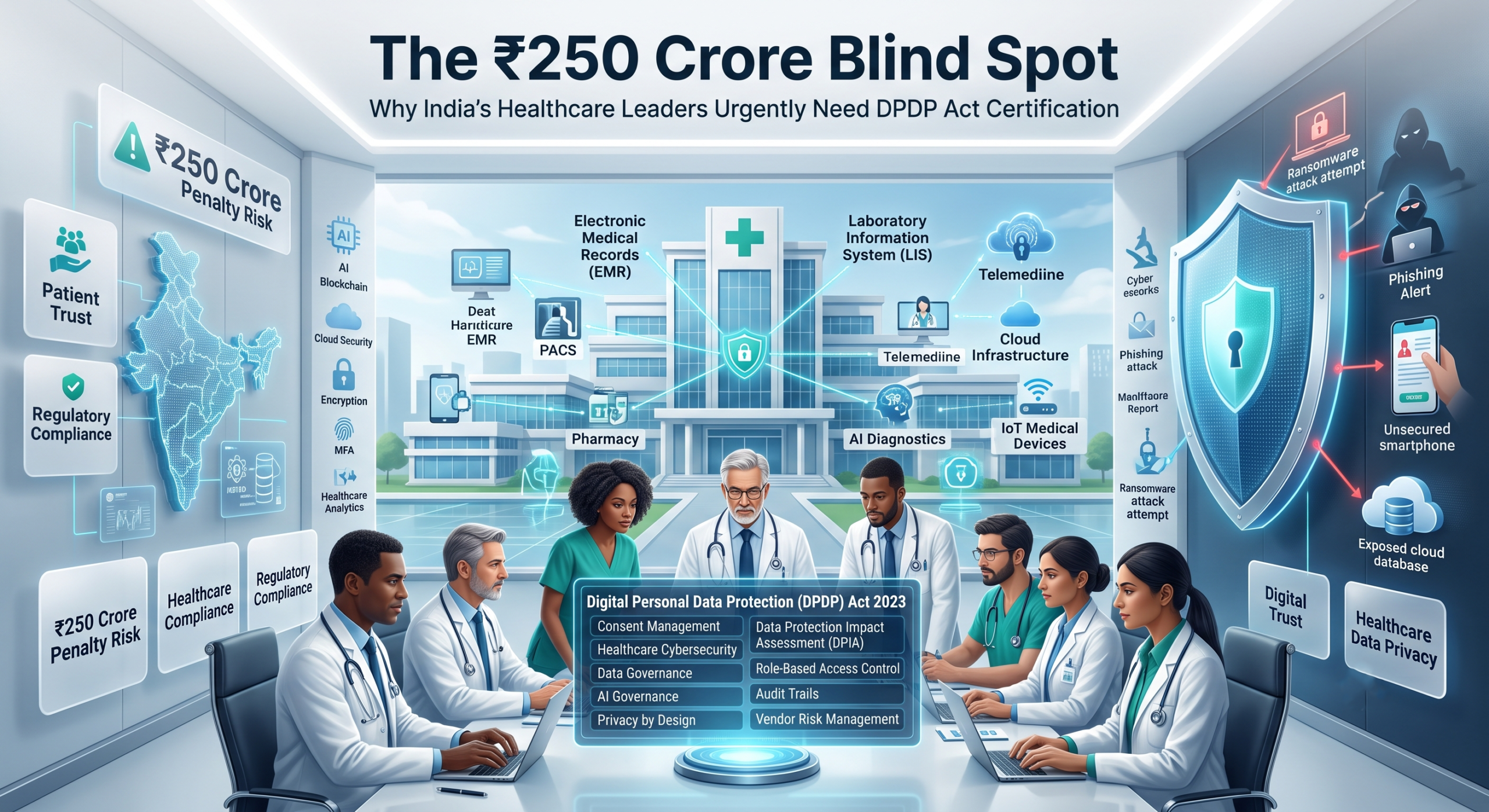

Indian healthcare is undergoing a structural transformation, and any hospital that wants to remain financially sound, operationally trustworthy, and clinically credible must build itself on four foundational pillars: NABH accreditation, empanelment with government and private payers, strong core administrative and clinical leadership, and digitalisation. Of these four, digitalisation has become the connective tissue that makes the other three work efficiently in today’s environment. It is no longer an optional upgrade; it is the operating system on which a modern hospital runs.
𝗧𝗵𝗲 𝗙𝗼𝘂𝗿 𝗣𝗶𝗹𝗹𝗮𝗿𝘀, 𝗕𝗿𝗶𝗲𝗳𝗹𝘆
• 𝗡𝗔𝗕𝗛 𝗔𝗰𝗰𝗿𝗲𝗱𝗶𝘁𝗮𝘁𝗶𝗼𝗻: The benchmark for patient safety, clinical governance, and standardised quality systems, and the credibility marker payers and regulators look for first.
• 𝗘𝗺𝗽𝗮𝗻𝗲𝗹𝗺𝗲𝗻𝘁: Access to government schemes such as Ayushman Bharat (PM-JAY), ECHS, CGHS, and state health schemes, alongside private TPAs and insurers, which together determine patient volume and revenue mix.
• 𝗖𝗼𝗿𝗲 𝗔𝗱𝗺𝗶𝗻𝗶𝘀𝘁𝗿𝗮𝘁𝗶𝗼𝗻 𝗮𝗻𝗱 𝗖𝗹𝗶𝗻𝗶𝗰𝗮𝗹 𝗟𝗲𝗮𝗱𝗲𝗿𝘀𝗵𝗶𝗽: The doctors and administrators who set clinical protocols, manage resources, and hold the institution accountable for outcomes.
• 𝗗𝗶𝗴𝗶𝘁𝗮𝗹𝗶s𝗮𝘁𝗶𝗼𝗻: The technology backbone that now ties the first three together and determines how well a hospital can prove, sustain, and scale its quality, its empanelment, and its leadership decisions.
Why Digitalisation Has Become Non-Negotiable
The Government of India, through the Ayushman Bharat Digital Mission (ABDM), is pushing the entire healthcare ecosystem toward paperless, interoperable, digitally verifiable records. Empanelment schemes such as PM-JAY, ECHS, and CGHS increasingly expect claims, treatment records, and eligibility checks to move through digital portals rather than paper files. A hospital that has not digitalised its front office, its clinical documentation, and its billing workflows will find itself slower to onboard on these schemes, slower to get claims cleared, and at a structural disadvantage against hospitals that have already made the shift. In this sense, digitalisation is what keeps the empanelment pillar functional, and it is what keeps NABH-mandated documentation audit-ready at all times rather than assembled under pressure before a survey.
Digitalisation and Profitability
A digitalised hospital information system reduces revenue leakage at every point where paper-based processes traditionally lose money: missed charge capture, delayed billing, duplicate or mismatched entries in the schedule of charges, and slow reconciliation of package-based payments from government and insurance panels. Real-time dashboards let administrators track bed occupancy, department-wise profitability, and payer-mix trends as they happen rather than at month-end, which means corrective decisions can be made while they still matter financially. Digital claim submission and tracking under schemes like PM-JAY also shortens the receivables cycle, which directly improves cash flow, a chronic pain point for hospitals that still depend on manual claim files.
Digitalisation and Reliability
Reliability in a hospital is built on consistency, and consistency is difficult to sustain on paper. Electronic health records ensure that a patient’s history, allergies, investigations, and treatment plan travel with them across departments without being lost, misfiled, or illegibly written. Digital systems standardise how orders are placed, how results are reported, and how discharge summaries are generated, which reduces the variation that leads to clinical error. For NABH compliance specifically, a digital audit trail means that indicators, incident reports, and quality metrics are captured automatically and consistently, rather than reconstructed retrospectively, making the hospital reliably survey-ready rather than survey-ready only in spurts.
Digitalisation and Ethical Patient Care
Perhaps the most important contribution of digitalisation is to the ethics of patient treatment. Digital systems create a transparent, timestamped, and tamper-evident record of what was advised, what was consented to, what was billed, and what was actually done. This transparency protects patients from unnecessary procedures, protects the hospital from disputes, and gives regulators and empanelment agencies confidence that treatment decisions are clinically justified rather than revenue-driven. Digital consent processes, standardised treatment protocols embedded in the system, and traceable prescription and billing data all work together to close the gap between what a hospital claims to do and what it can actually demonstrate it did.
Bringing the Four Pillars Together
NABH accreditation defines the standard, empanelment defines the market access, and administrative and clinical leadership defines the judgment applied on the ground. Digitalisation is what allows all three to be executed consistently, verified transparently, and scaled across multiple hospital units without losing control. As India’s National Digital Health Mission continues to push every layer of the healthcare system toward interoperable, paperless operations, hospitals that treat digitalisation as their fourth and most active pillar will be the ones that stay profitable, stay trusted, and stay ethically accountable in the years ahead.
𝗖𝗼𝗻𝗰𝗹𝘂𝘀𝗶𝗼𝗻
NABH accreditation sets the standard, empanelment secures the market, and clinical leadership provides judgment — but digitalisation is what makes all three hold up under scrutiny and scale. As ABDM pushes Indian healthcare toward paperless, interoperable systems, the gap between digitally mature hospitals and the rest will only widen — in claims turnaround, survey readiness, and patient trust. Digitalisation is no longer the fourth pillar sitting alongside the others; it’s what determines whether the other three deliver at all. –
By 𝗗𝗿 𝗝𝗮𝘀𝗷𝗶𝘁 𝗦𝗶𝗻𝗴𝗵 (𝗣𝗵𝗗, 𝗠𝗣𝗛, 𝗠𝗕𝗔), 𝗩𝗣 𝗤𝘂𝗮𝗹𝗶𝘁𝘆 & 𝗥𝗲𝘃𝗲𝗻𝘂𝗲 𝗔𝘀𝘀𝘂𝗿𝗮𝗻𝗰𝗲, 𝗨𝗷𝗮𝗹𝗮 𝗖𝘆𝗴𝗻𝘂𝘀 𝗚𝗿𝗼𝘂𝗽 𝗼𝗳 𝗛𝗼𝘀𝗽𝗶𝘁𝗮𝗹𝘀