Healthcare is changing rapidly. Earlier, hospitals focused only on treating patients. Today, hospitals also need to improve patient experience, reduce costs, increase revenue and make better decisions through technology. One technology that can play a very important role in this journey is FHIR (Fast Healthcare Interoperability Resources). Many hospital owners in India still believe that FHIR is only an IT subject. In my opinion, this is not correct. FHIR is actually a business tool. If implemented in the right way, it can directly improve operational efficiency, reduce revenue leakage and help hospitals grow faster.
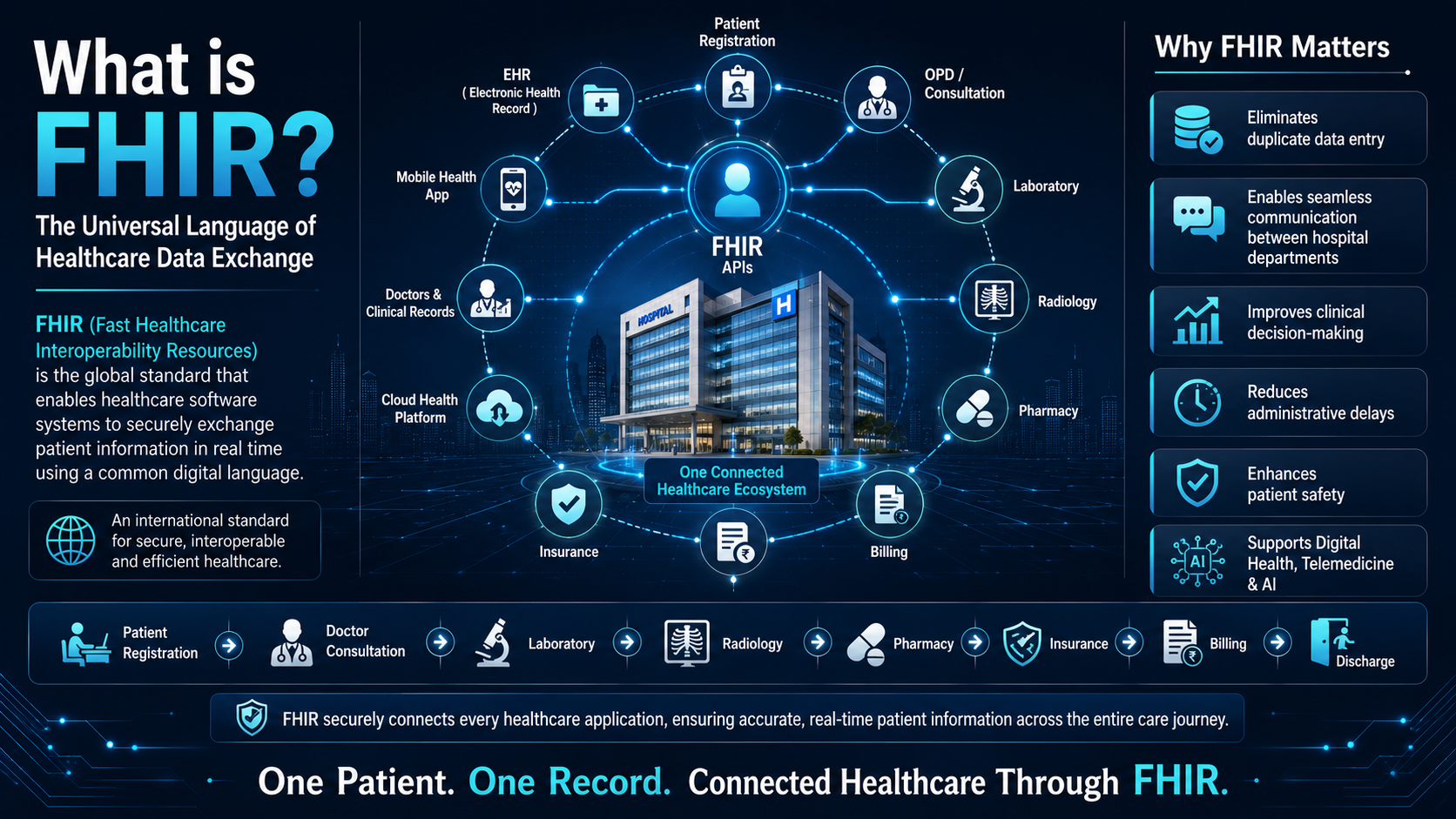
𝗪𝗵𝗮𝘁 𝗶𝘀 𝗙𝗛𝗜𝗥?
FHIR is an international standard developed to allow different healthcare software systems to communicate with each other. In simple words, FHIR ensures that patient information moves smoothly between departments and different applications without manual work.
For example, when a patient visits a hospital, he or she may interact with registration, OPD, laboratory, radiology, pharmacy, billing, insurance and doctors. Normally, each department may use separate software or maintain separate records. This creates duplication, delays and errors. FHIR acts like a common language that connects all these systems.
𝗧𝗵𝗲 𝗖𝘂𝗿𝗿𝗲𝗻𝘁 𝗦𝗶𝘁𝘂𝗮𝘁𝗶𝗼𝗻 𝗶𝗻 𝗠𝗮𝗻𝘆 𝗛𝗼𝘀𝗽𝗶𝘁𝗮𝗹𝘀
During my interaction with hospitals and polyclinics, I have observed that many organisations still face similar operational problems like: The registration desk entering patient details multiple times, Laboratory reports being uploaded manually, radiology images taking time to reach consultants, doctors sometimes not being able to access previous medical history immediately, and billing teams manually verifying investigations, management receives delayed reports because data is scattered across departments, All these issues reduce productivity and indirectly affect hospital revenue.
𝗛𝗼𝘄 𝗙𝗛𝗜𝗥 𝗖𝗮𝗻 𝗜𝗺𝗽𝗿𝗼𝘃𝗲 𝗥𝗲𝘃𝗲𝗻𝘂𝗲
Many people think technology only increases expenses. I believe that if implemented properly, FHIR should be viewed as a revenue-generating investment rather than an IT cost.
1. Faster Patient Registration – Patient details can automatically flow into every department after a single registration. This reduces wait times, and patients appreciate faster service. Higher patient satisfaction often results in better retention and positive word-of-mouth referrals.How FHIR Can Improve Revenue
2. Better Doctor Productivity – Doctors spend less time searching for reports and more time consulting patients. If every consultation saves even five minutes, the doctor can see more patients during the day.Benefits for Polyclinics
FHIR is not just for large hospitals—polyclinics can benefit significantly from seamless interoperability. By connecting consultations, diagnostics, pharmacy, and other services on a single platform, FHIR enables faster patient care, complete access to medical history, fewer repeat investigations, improved cross-referrals, and better follow-up management. These efficiencies enhance patient satisfaction, increase pharmacy conversions, and ultimately improve revenue per patient without increasing marketing costs.
More consultations mean higher OPD revenue.
3. Faster Laboratory and Radiology Workflow – Investigation requests automatically reach the laboratory and radiology departments. Reports are sent directly back into the patient’s electronic record. There is no need for repeated phone calls or manual coordination, which significantly reduces turnaround time.
4. Reduction in Billing Errors – Sometimes investigations are performed but are not billed because of communication gaps. Similarly, some medicines are dispensed without proper billing; FHIR-based integration ensures every clinical activity reaches the billing system and eventually this reduces revenue leakage. Even recovering 2–3% of missed billing can make a noticeable difference in annual hospital income.
5. Better Insurance Processing – Insurance companies require complete documentation. If reports, prescriptions and investigation records are available electronically, claim processing becomes faster. Quicker approvals improve hospital cash flow, and reduced claim rejection directly increases realised revenue.
6. Improved Pharmacy Revenue – Doctors prescribe medicines electronically. The pharmacy instantly receives prescriptions. Medicine availability can be checked immediately, and patients are less likely to purchase medicines outside the hospital. This increases pharmacy sales.
7. Stronger Management Decisions – Hospital management receives real-time dashboards instead of waiting for month-end reports. Leadership can monitor: Daily revenue, OPD trends, Bed occupancy, Laboratory performance, Pharmacy sales, Doctor productivity, Revenue leakage.
𝗕𝗲𝗻𝗲𝗳𝗶𝘁𝘀 𝗳𝗼𝗿 𝗣𝗼𝗹𝘆𝗰𝗹𝗶𝗻𝗶𝗰𝘀
FHIR is not just for large hospitals—polyclinics can benefit significantly from seamless interoperability. By connecting consultations, diagnostics, pharmacy, and other services on a single platform, FHIR enables faster patient care, complete access to medical history, fewer repeat investigations, improved cross-referrals, and better follow-up management. These efficiencies enhance patient satisfaction, increase pharmacy conversions, and ultimately improve revenue per patient without increasing marketing costs.
𝗥𝗼𝗹𝗲 𝗶𝗻 𝗣𝗿𝗲𝘃𝗲𝗻𝘁𝗶𝘃𝗲 𝗛𝗲𝗮𝗹𝘁𝗵𝗰𝗮𝗿𝗲
FHIR enables hospitals and polyclinics to shift from reactive treatment to proactive, preventive care. By using interoperable patient data, healthcare providers can send automated reminders for follow-up visits, annual health screenings, chronic disease management, and vaccinations. These timely interventions improve patient compliance, strengthen long-term engagement, enhance health outcomes, and increase patient retention while creating recurring revenue opportunities through preventive healthcare services.
𝗦𝘂𝗽𝗽𝗼𝗿𝘁𝗶𝗻𝗴 𝗔𝗿𝘁𝗶𝗳𝗶𝗰𝗶𝗮𝗹 𝗜𝗻𝘁𝗲𝗹𝗹𝗶𝗴𝗲𝗻𝗰𝗲
Artificial Intelligence delivers its best results when powered by accurate, standardised healthcare data. FHIR provides this foundation by enabling seamless data exchange across hospital systems. With interoperable data, hospitals can use AI to predict patient admissions, identify high-risk patients, optimise staffing, forecast medicine demand, improve appointment scheduling, and reduce readmissions. These capabilities enhance clinical decision-making, improve operational efficiency, and strengthen financial performance.
𝗜𝗺𝗽𝗹𝗲𝗺𝗲𝗻𝘁𝗮𝘁𝗶𝗼𝗻 𝗖𝗵𝗮𝗹𝗹𝗲𝗻𝗴𝗲𝘀 𝗶𝗻 𝗜𝗻𝗱𝗶𝗮
Implementing FHIR in India presents challenges such as legacy hospital systems, limited healthcare IT expertise, initial technology investments, resistance to change, and concerns around data privacy and cybersecurity. However, with phased implementation, staff training, strong leadership, and the right technology partners, hospitals can successfully adopt interoperability and achieve significant long-term operational and financial benefits.
𝗠𝘆 𝗣𝗲𝗿𝘀𝗽𝗲𝗰𝘁𝗶𝘃𝗲
Hospitals should view digital transformation as a strategic business investment, not just an IT project. Every technology initiative should improve both patient care and financial performance. By integrating clinical and administrative systems through FHIR, hospitals can reduce delays, improve operational efficiency, minimise errors, and enable faster, data-driven decision-making—creating a smarter, more patient-centric, and financially sustainable healthcare organization.
𝗖𝗼𝗻𝗰𝗹𝘂𝘀𝗶𝗼𝗻
Healthcare is becoming more competitive every year. Patients expect convenience, transparency and faster services. Hospital owners expect higher profitability without compromising quality. FHIR provides an opportunity to meet both expectations. It helps hospitals connect people, processes and technology into one integrated ecosystem. The result is better patient experience, smoother operations, reduced revenue leakage and stronger financial performance. In the coming years, I believe hospitals that invest in interoperability will have a significant competitive advantage over those still relying on disconnected systems and manual processes. Technology alone cannot transform healthcare. But when combined with good leadership, efficient workflows and a patient-centric approach, FHIR can become one of the most valuable tools for building a smarter, more profitable and future-ready hospital.Role in Preventive Healthcare
Dr Tarun Sharma – Strategic Healthcare Planner | Senior Leadership | Deep Thinker